review

Postmodern Rapture – The Leftovers Series Premiere

article-2654110-1EA2AAB600000578-391_634x356

Every Tuesday Colton Royle discusses the newest episode of HBO’s new show about a new kind of rapture, The Leftovers. Since two episodes have already aired, episode one is covered today, episode two will be covered on Monday, and we’ll be caught up by Tuesday. You can also read our review of the book the show is based on.

Colton Royle

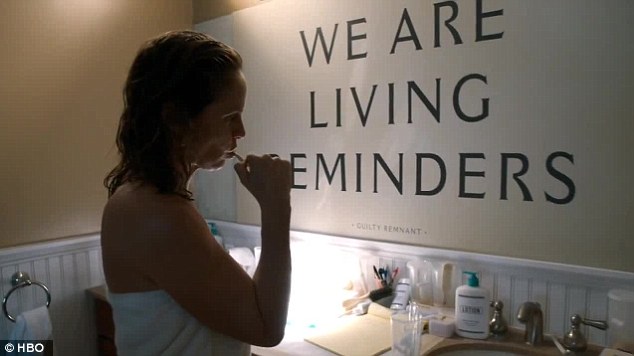
We all remember the 1990s and Kirk Cameron, but it’s a new decade, and The Leftovers, an HBO series based on the novel of the same name by Tom Perotta, hopes to avoid any religious dogma while presenting moral aspirations of its very own. The story mostly follows the Garvey family in the suburban and affluent Mapleton, and it has been three years after a rapture-like disappearance of two percent of the world population by unknown causes. “Gary fuckin’ Busey,” a bartender says before turning the volume down, an almost overused reminder in the first episode that there was no motivation or criteria. Mapleton remembers October 14 as “Hero’s Day” and holds a parade to honor the ones that have gone. It is a world of letters with no signatures, and little to no hope of anything near redemption.

The following contains spoilers.

And yet, even with Kevin Garney, police officer and existential night runner, as he punches a photograph of his wife on the wall, even with the students burying a dog and lamenting, “I’m sorry you had to go through this,” and the stale parallels in that, the story is already heading towards some Stephen King style good vs. evil conflict a la The Stand and Under the Dome. Not one but three cults have emerged from the mess of disappearances, each with their own reasoning for the event. The Garney family itself is as fractured as the town, with the father coping with his own wife, in a twist, not as one of those vanished, but a member of the silent-and-chain-smoking-and-traveling-in-pairs Guilty Remnants. Kevin’s son Tom attempts a relationship with a young Asian woman who is under the watchful eye of Wayne, a leader for the second cult, as he holds his eyes open just a little too wide and intimidates with knife moves. And the daughter, who floats in anti-paranoia for as long as possible, gets high on-campus and elbows girls in field hockey.

I myself am stumped by my reactions: do I want a supernatural show to commit to a linear progression of understanding? Because I seem also to enjoy, only slightly, the sheer noise of responses, the entropy of anger. Even the parallel structure with Kevin Garney and his run-in with the dog killer, from hatred for killing animals, to his changeover to shooting the dogs with a gun of his own, the symbolism oversaturated, at least was somewhat intriguing. They showed a lot and told a little, which is a good start, but it will face difficulties in tone and therefore audience if it is continued. “They’re not our dogs anymore,” the hunter says, and while that is true for the town of Mapleton, so far, it is also a question in the air for the entire show. Who will The Leftovers belong to?

Colton Royle is a reader of mostly American fiction and non-fiction. He is currently teaching in Fort Worth, Texas.

What I Did With My Summer Vacation: Review

Screen-Shot-2014-03-06-at-2.30.53-PM

Alex Russell

In What I Did With My Summer Vacation we explore shows you should catch up on during TV’s slowest season. This week: the downward spiral of Andy Daly on Review.

We’re gonna talk about Andy Daly’s extremely strange, extremely dark glance at humanity in a second. FIrst, I’m gonna need you to watch him eat 15 pancakes.

I normally don’t think “you’ve just gotta see it” is an important component of criticism, but there’s only so much I can tell you about Review without you having some basic experience with it. It’s Andy Daly (who you may know from Eastbound & Down or various podcastsplaying Forrest MacNeil, a “life reviewer.” He hosts a show within a show, which sounds more complicated than it is.

Forrest is the most interesting kind of madman in that he truly believes he has insight the world needs. His character is defined by the lengths he’ll go to for the “perfect” review. It’s no spoiler to tell you that “Pancakes, Divorce, Pancakes” gets a little dark, but the it’s all more interesting than most shows that get labelled “dark.”

It’s not the divorce itself, that part’s not funny. It’s that Forrest truly believes he’s making something that matters. He believes that by experiencing divorce in a happy marriage he can impart wisdom to the world. He’s game for anything — anything — because he has to have the first-hand experience to “review” it on his show.

It’s Always Sunny in Philadelphia works while other shows about terrible people don’t because the characters in Sunny are getting worse in really slow, specific ways. Dennis on Sunny is likely a murderer at this point, so the show can play around with him being “just an asshole” for a little while with no real fear of those little slights making him unlikable in that moment. If you’re on board for what Sunny has to say about the world — that nothing really matters as long as you’re totally oblivious — then you’re on board for everything else they do to their characters. They can eat garbage or mail people their hair or whatever; they are beyond simple changes now.

Not so with Forrest. Forrest is a character that’s alternatively really depressing and really infuriating. He ruins his own life to make these “reviews” for his show, but even the show itself doesn’t matter. He makes bad choices and stands to gain nothing from them beyond fodder for a show. That gives the whole thing a meta feel to it that layers over the darkness; you feel genuinely bad for Andy Daly while you also feel that Forrest MacNeil deserves what he gets.

It’s a wonder the show worked with so many people. I was deeply in love with it from the start, but bits like a misunderstanding of language that causes Forrest to commit himself to serious mental care (“There All Is Aching”) really require you to take a few steps as a viewer. Anyone should be able to enjoy Andy Daly dressed as Batman trying to get his son back, though (“Being Batman”). Watch that one, and, hell, you’ve already watched him eat 15 pancakes. Don’t you want to see what the second installment of pancakes could possibly be?

It’s 30 pancakes, but as with everything else in Forrest MacNeil’s life, it’s so much more than that.

You can watch highlights of season one of Review on Comedy Central’s site, and the full season is around if you’re crafty. Season two comes out in 2015, so you better be ready.

Alex Russell lives in Chicago and is set in his ways. Disagree with him about anything at readingatrecess@gmail.com or on Twitter at @alexbad.

Life After the Star Wars Expanded Universe: Raymond Chandler’s The Long Goodbye

download

Andrew Findlay

In Life After the Star Wars Expanded Universe, we take a look at science fiction and fantasy, why they’re great, and what they say about where our species has been and where it’s going. 

This one is a bit of a stretch. There are no spaceships, no wars over nascent technology, no deadly viruses, and no door-opening dinosaurs. There are a whole bunch of drunks, smog, and Oldsmobile convertibles. Yessir, this book takes place in 1950s L.A., the world of doctor-endorsed cigarettes, movie stars, mansions, and extensive highway systems. It still fits here because this book and almost everything after it owes its existence to the pulps, a medium that infused SF with the life it needed to become the powerhouse it is today, where it seems half of all new TV shows and movies have at least some type of speculative element.

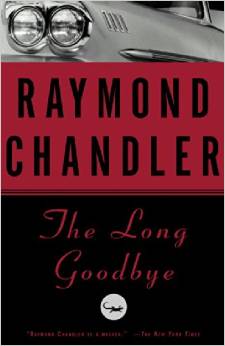
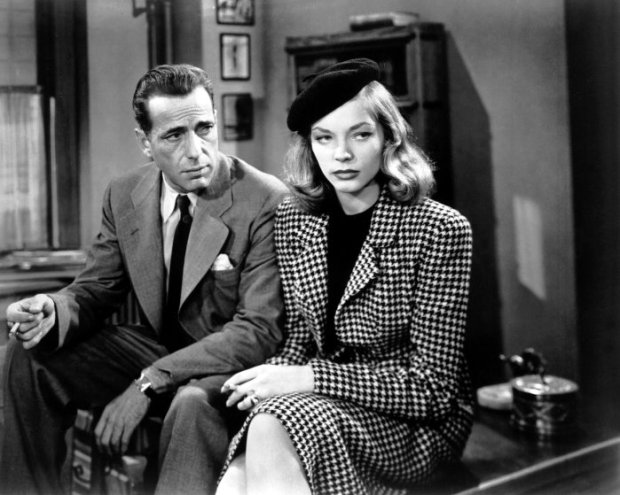
Pulps were magazines published on cheap, rough-looking wood pulp paper. They were about half the price of the more prestigious magazines, and they published detective stories, horror fiction, adventure fiction, and science fiction. It was something cheap to read on the train and then throw away. A lot of writers who went on to publish their own novels ate on the checks they won from these magazines. Raymond Chandler wrote for Black Mask, which specialized in mysteries. Chandler has a weird story, as far as writing goes. He was a top oil executive pre-Depression, but lost his job and decided to try his hand at writing. His first short story was accepted at 45, his first novel published at 51. It is an impressively late start for someone who created such an enduring legacy in American fiction. He took what James M. Cain and Dashiell Hammett started and forged it into one of the most recognizable subgenres out there: the hard-boiled detective story. Their protagonists are hard-fighting, hard-drinking men with a cynical outlook on life and a questionable relationship with the rest of the human race. Their style is one of spare, densely descriptive prose. The atmosphere of the books (at least The Long Goodbye) is more oppressive and fully-built than most other novels – this type of fiction lives on style. A lot of that style is created by the cynical, fast-talking wisecracking of the main character, Philip Marlowe. Basically, Raymond Chandler and Humphrey Bogart together created the American cultural memory of how men spoke in the 40s and 50s. In fact, Bogart delivered the defining film interpretation of Philip Marlowe in the movie version of Chandler’s first book, The Big Sleep.
MV5BMTg3NzQ0NTY4NV5BMl5BanBnXkFtZTgwNDY1MzU5MTE@._V1__SX1305_SY559_

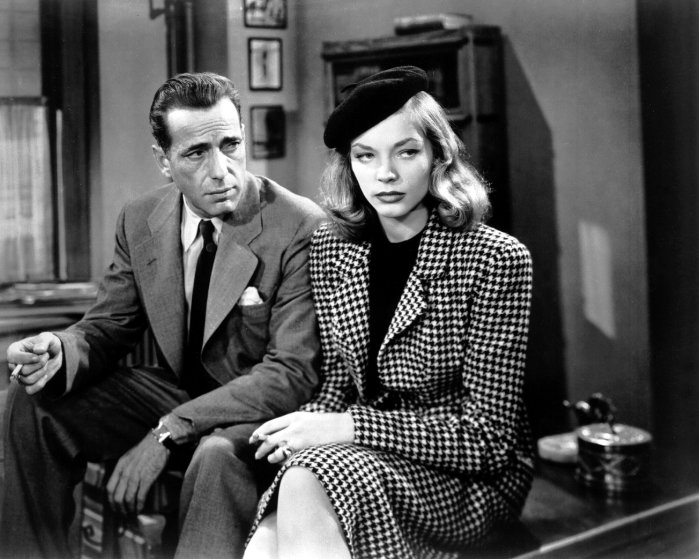
If you have not seen Lauren Bacall and Humphrey Bogart acting together, you do not know what American cinema is.

The words and delivery of the main character form so much of the atmosphere of this book that the analysis of the few choice quotes that follow is necessary for an understanding of the book.

I. Intro

The first time I laid eyes on Terry Lennox he was drunk in a Rolls-Royce Silver Wraith outside the terrace of The Dancers. The parking lot attendant had brought the car out and he was still holding the door open because Terry Lennox’s left foot was still dangling outside, as if he had forgotten he had one. He had a young-looking face but his hair was bone white. You could tell by his eyes that he was plastered to the hairline, but otherwise he looked like any other nice young guy in a dinner jacket who had been spending too much money in a joint that exists for that purpose and for no other.

This is the first paragraph of the novel. It introduces the principal mystery-driving character of a mystery story, so it is pretty important. This uses really simple language to convey a lot of information. First, the description of the character: young face, white hair, drunk as hell. A lot of descriptions work this way – Marlowe’s inner monologue always gives details about every new person in the story, and it is always a handful of key details that then leave you with more than enough to construct a full character. Hard-boiled detective fiction is the spiritual successor of of Hemingway’s iceberg theory of writing. Also, the stylistic flourishes like “as if he had forgotten he had one” and “plastered to the hairline” are beautiful examples of Bogart talk, which, again, Chandler played a key role in inventing.

1948_Rolls_Royce_Silver_Wraith_Freestone_Webb_Coachwork

The Rolls-Royce Silver Wraith. There’s a line in the book saying that this is more attractive than women, so… different times, I guess?

II. Bogart Talk (BT henceforward)

These quotations are collected from all over the book, and the BT is strong in all of them.

And the next time I saw a polite character drunk in a Rolls-Royce Silver Wraith, I would depart rapidly in several directions. There is no trap so deadly as the trap you set for yourself.

Notice the information-dense recall of Terry Lennox (who has since caused Marlowe a heap of trouble): the “polite character drunk in a Rolls-Royce Silver Wraith,” followed by the darkly, impossibly humorous “depart rapidly in several directions,” capped off by the cynical and truthful commentary: “there is no trap so deadly as the trap you set for yourself.”

They put as much muscular activity into a telephone conversation as I would put into carrying a fat man up four flights of stairs.

This second quotation is less complex, but still a great distillation of BT. Cynical, removed, semi-humorous view of the world tinged by disgust at what is being observed, summed up by a weird simile. The jarring quality of the strange simile stretches it almost to tearing, but it doesn’t tear, and the result is stronger than a more measured comparison would be.

The fellow who decorated that room was not a man to let colors scare him.

Not much to say here, just perfect dismissiveness and darkly humorous cynicism

I kissed her some more. It was light, pleasant work.

Again, cynicism and humorous dismissal, the humor arising in large part from the extent of the dismissiveness. Sure, Marlowe’s pretty excited, he’s kissing a beautiful woman, but all he reports is the hilariously understated “It was light, pleasant work.”

III. Social Commentary

Sheriff Petersen just went right on getting re-elected, a living testimonial to the fact that you can hold an important public office forever in our country with no qualifications for it but a clean nose, a photogenic face, and a closed mouth. If on top of that you look good on a horse, you are unbeatable.

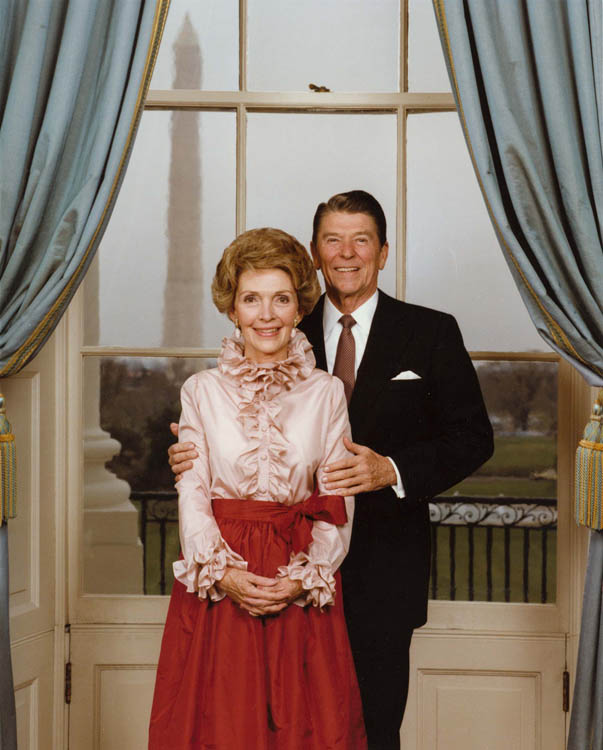
So, The Long Goodbye gets a lot of credit for being a vehicle for social commentary. Here is just the barest snippet, a beautiful dismemberment of the political process. Winning elections is all, all appearance, and no content. If you think Chandler or Marlowe is excessively cynical, just know that handsomeness has had a ridiculous influence on election results ever since Nixon and Kennedy. As a more recent example, I voted for Obama both times (it’s turned out kind of meh, but his stated platform was not explicitly evil, so). I remember being a lot more worried about Romney v. Obama than I was about McCain v. Obama. What created this dynamic? Obama is energetic and attractive, and McCain came off as an angry, wrinkled old man. Romney, on the other hand, was in roughly the same spot as Obama on the attractiveness spectrum. Policies aside, the man’s face is so chiselled it looks like he is currently on Mt. Rushmore. He ended up losing, but especially after that first debate, I was concerned he wouldn’t. Against an incumbent president. Because he was so pretty. Chandler knew and dismantled this failing of the American political system more than half a century ago, and it is only one of the smallest pieces of social commentary he weaves into this book.
President_and_Mrs._Reagan_pose_in_the_Blue_Room_for_their_official_portrait_1981

Walter Mondale didn’t stand a fucking chance.

IV. Philip Marlowe is a badass

A basic requirement of a hard-boiled protagonist is that he know his way with his gun, with his fists, with a chair, or with whatever blunt objects happen to be within reach. The assumed badassery of the character is key. That being said, Marlowe is not some two-bit punk. He does actually try to avoid violence as much as possible, and he shows quite a bit of sentimentality whenever events break through his wisecracking exterior. Anyway, observe:

I started to get up. I was still off balance when he hit me. He hooked me with a neat left and crossed it. Bells rang, but not for dinner. I sat down hard and shook my head.

So, this is describing when Marlowe was being questioned by police and made one angry on purpose to get him to hit him so he could gauge his threat level. The data gathered from this experiment indicated that this cop was more a boxer than a fighter, and that Marlowe would be able to take him to pieces if he hit him again. First off, inciting a punch to the face as a fact-finding mission is amazing. Secondly, the BT involved in “Bells rang, but not for dinner” to indicate that it was a hard hit, but only hard enough to make him shake his head, is a perfect incarnation of the form.

You’re a piker, Marlowe. You’re a peanut grifter. You’re so little it takes a magnifying glass to see you. I didn’t say anything at all.

Marlowe is being directly insulted here, but is cool and collected enough to take no offense, let the man keep talking, and say nothing at all. A key feature of the hard-boiled hero is self-control and a certain superiority to emotion-driven idiots. He controls his emotions. Until the man is done talking, that is.  At the end of the conversation, this guy who has been flaunting his wealth and calling Marlowe a nobody left his valuable cigarette case behind. Marlowe moves to return it, and then:

“I got a half dozen of them,” [the rich asshole] sneered.

When I was near enough to him I held it out. His hand reached for it casually. “How about half a dozen of these?” I asked him and hit him as hard as I could in the middle of his belly.

A lot happened here. Saying nothing, taking it with equanimity at first. After the exchange has taken place, being taken over the edge by a final snide comment. Then, Marlowe accomplishes two things: flooring a man who has been shitting all over him and inserting a wonderful piece of BT as he does it, “How about a half a dozen of these?” Someone has been served here, and it ain’t Marlowe.
litreactor-marlowe

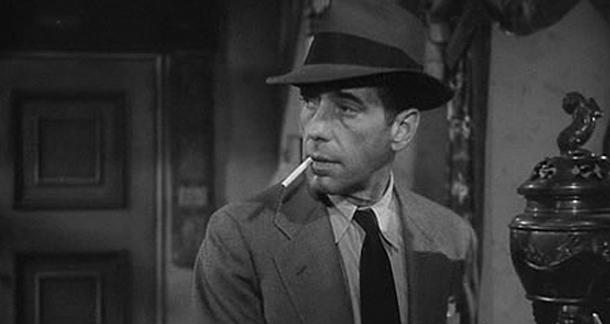
I don’t always smoke, but when I do, it’s after watching a Humphrey Bogart movie.

Chandler has been called a hack by some and a thief by others (he has a lot in common with earlier crime writer Dashiell Hammett). Those calling him a hack are hacks themselves, and those calling him a thief should realize that he did not steal a style, he polished and perfected it. He gave to American crime fiction a literary element it didn’t quite have before. His densely-packed, evocative prose created a legion of admirers, from Paul Auster to Joyce Carol Oates. Again, he almost single-handedly invented an entire style of dialogue.

The overarching plot of the book is a little crazy. Marlowe happens to meet a drunk at a club and finds out he has a beautiful wife. About ten pages later, the beautiful wife is dead and the drunk is at Marlowe’s house with a gun asking for a ride to Mexico. The drunk is a bit nervous, so Marlowe pours him a big shot of Old Grand-Dad (which I have been drinking steadily while writing this article). He takes him out of the country, returns, and spends the rest of the book navigating a world of shit as he attempts to find out what happened. By the denouement, there are so many twists and turns and moving parts that the whole thing almost comes crashing down. Almost. That being said, I hit the last 200 pages of this book and could not stop, meaning that I read until five a.m. and went in to work on just under three hours of sleep. Sometimes crazy is good. In addition, the solid, vivid atmosphere put together by Chandler alongside the snappy dialogue means that if it had been a story about the night shift at Pizza Hut, I still would have read it.

American crime fiction started its life in the literary backwater of pulp fiction, and a lot like SF, has since migrated into the mainstream. Raymond Chandler’s cynical style, sparse prose, and satisfying plotting laid a lot of the groundwork for that. He considered The Long Goodbye his greatest work, and you should too. Read it right now.

Andrew Findlay has strong opinions about things (mostly literature) and will share them with you loudly and confidently. You can email him at afindlay.recess@gmail.com.

Images: IMDB, Amazon, and Litreactor
Whimsy and Ire: Sparklehorse’s Southern Artistry

sparklehorse-s-opt

Gardner Mounce

Mark Linkous of the band Sparklehorse had a singular vision and improved it with each of his four studio releases. He was an auteur with enough DIY-ness to impress a Fugazi fan. He recorded his second album in a room of his Virginia home, and two subsequent albums in his backyard shed-turned-studio. It may not seem like a big change, but you can hear the difference. The final two albums teem with texture and shadowy sonic alcoves that demand repeat listening. But don’t get the impression that he’s a “difficult” artist. His music has that chest-crushing nostalgic quality that can only be compared to Mark Kozelek’s earlier work with Red House Painters. And as with Kozelek’s music, as soon as you get sucked in, you’re sucked in for good. Because Linkous possesses the practiced ability to instill in you, dear Southerner, the feeling of that April pre-storm heaviness in the boughs. If you will.

Like his ‘90s post-Pixies predecessors, Linkous found that balance between sweetness and raucous noise, but rode it better than Billy Corgan or even Kurt Cobain. On most tracks he sings with a gold-shot sweetness of dust mote attic worlds, haunted forgotten places. You get the feeling of post-industrial Southern ruralness, of places where machines lie ruined in the weeds. He fetishizes southern knick knacks to the point that you feel nostalgic for those boxes of broken dolls and nails in your grandmother’s attic. His lyrics are full of that warm summer madness.

“The toothless kiss of skeletons
And the summer hail
I’m the king of nails

– “King of Nails” (It’s a Wonderful Life, 2001)

or

I am
The only one
Can ride that horse
Th’yonder

I’m full of bees
Who died at sea

It’s a wonderful life

– “It’s A Wonderful Life” (It’s a Wonderful Life, 2001)

But he can also get boisterously angry. On tracks like “Pig” (Good Morning Spider, 1998) his guitar sounds like electrified chicken wire. And his lyrics are written to match.

I wanna be a stupid and shallow mutherfucker now
I wanna be a tough skinned bitch but I don’t know how
I wanna be a shiny new baby with a spongy brain
I wanna be a horse filled with fire that will never tame

– “Pig” (Good Morning Spider, 1998)

If that’s not the anthem for your sensitive Southern rocker, I don’t know what is.

It is pure conjecture (arrived at while watching a documentary on the band, and a background in special education) that I believe Linkous could have had Asperger syndrome. His lack of social graces, introverted nature, and disarming politeness convinces the listener of his starry-eyed tenderness. When he croons “It’s a wonderful life,” he does so without irony (his band’s name is Sparklehorse, for God’s sake). Add Linkous’ tragic suicide in 2010 and antecedent drug overdose and the listener more fully intuits Linkous’ headspace, that continental divide between whimsy and ire, between buzzing warm cicada fields and the buzzing roar of his electric guitar.

When he was alive, he was hailed by Radiohead as their new favorite band, offered a collaboration with Tom Waits and PJ Harvey, and adored by critics. It’s because he was authentic. And his music perfectly embodies the South: that point where dreaminess and dreariness conflate.

What to listen to

As was stated above, Sparklehorse had a vision that only got better with time. Listen to the albums in reverse chronological order:

  • Dreamt for Light Years in the Belly of a Mountain (2006)
  • It’s a Wonderful Life (2001)
  • Good Morning Spider (1998)
  • Vivadixiesubmarinetransmissionplot (1995)

Gardner Mounce is a writer, speaker, listener, husband, wife, truck driver, detective, liar. When asked to describe himself in three words, Gardner Mounce says: humble, humble, God-sent.

Comic Review: The Wicked + The Divine: Issue 1

thewicked1

Gardner Mounce 

The Wicked + The Divine: Issue 1
Written by Kieron Gillen
Art by Jamie McKelvie
Published by Image Comics
Release: 6/18/2014

There are few things as pathetic for adults to engage in as the cult of personality. As a teenager, it’s expected–encouraged, even–to hang posters of pop stars and athletes on your wall. They are your heroes. They inhabit that nebulous world of fame that promises fulfillment and power, etc. But when you grow up, you pull back the veil and it turns out Justin Bieber is a turd and… Creed? (Yes, I had an actual Creed poster on my wall when I was in fifth grade. It’s my life. I wasn’t living it for you.) Image Comics’ latest release The Wicked + The Divine (heretoforth known as WD) finds that balance between idolizing these figures and understanding them to be human, but then tips it. Because in WD, the pop stars are actual gods.

In this world, 12 deities incarnate every 90 years as humans in order to live two years on Earth. Why? I’m not sure yet. But in 2014, they’re pop stars. Roll with it. Let’s touch on which gods we’re talking about, first of all. Is this going to be about a hip Jesus MCing a rap battle between Yah Boi Yahweh and Allah $? No. In the first issue we meet Ananke (Ancient Greek), Susanoo (Shinto), Amaterasu (Shinto), Sakhmet (Egyptian), and Lucifer. Try to guess which of those I didn’t have to Google. So, kudos to writer Kieron Gillen for exploring mythologies not often found in pop culture. Though the reader goes into the story knowing the gods are legitimate, Gillen doesn’t give the reader a god’s eye view. After an explosive introduction, we follow Laura, a 17-year-old fangirl of the gods (i.e. the teenage perspective in that balance I mentioned earlier). But, wisely, Gillen packs the deck with adult skeptics. A reporter accuses Amaterasu and the other gods of being “kids posturing with a Wikipedia summary’s understanding of myth,” and, more hilariously, accuses Amaterasu of being “a provincial girl who doesn’t understand how cosplaying a Shinto god is problematic at best and offensive at worst.”

thewicked2

Throughout, the dialogue crackles with similar wit and character. But that isn’t the only aspect of the writing that’s on point. The scenes build and explode with heady pacing and smooth transitions. And, suggesting a great trust between writer and artist not often found in comics, Gillen never weighs down the art with unnecessary narration. It should be a major pet peeve of every comic reader when a panel that shows a man running from a bomb also has that man yelling, “I am RUNNING from a BOMB!”

The art matches the writing in quality. Whether or not you’ve read another McKelvie comic, you know intuitively that his art is practiced. The panels are arranged poetically, correctly, becoming denser or larger with the beats of action. Likewise, colorist Matt Wilson endows the panels with a versatile color palette capable of portraying violence, beauty, and fame. In this first issue, the really standout feature of the art is the character design. It is my suspicion that each character has a real-world analogue that may or may not have deeper significance. Amaterasu looks like the lead singer of Paramore going through a hippie stage. Sakhmet looks similar to Rihanna. And Lucifer (Luci, in this case) looks just like Pink.

thewicked3

Lucifer, everyone.

The promise this first issue shows isn’t in the premise or story, which is, in my opinion, sort of like American Gods (which I really didn’t like) but in how the story is told. Gillen and McKelvie are master storytellers, and the evidence is borne out in the details.

Should you get it?

Yes, most definitely. This is an exciting new release, written with intelligence and wit.

Gardner Mounce is a writer, speaker, listener, husband, wife, truck driver, detective, liar. When asked to describe himself in three words, Gardner Mounce says: humble, humble, God-sent.

Comic Review: Rising Stars

rising-stars-comic(1)

Brent Hopkins

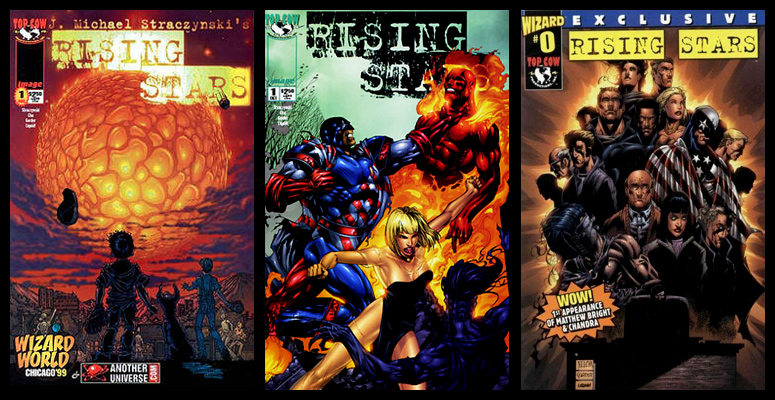
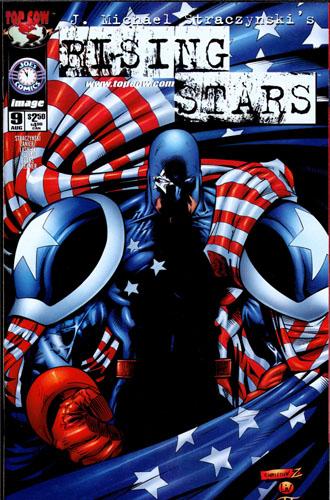
The 24-issue Rising Stars is an interesting tale of a group of children that attain superpowers via an intense flash of light from a comet. These children were all yet to be born and therefore only 113 of them receive this “gift.” They grow up with their powers and become known as the “Specials.”

Story

The story behind Rising Stars is definitely where the main interest lies. There has always been human interest figuring out how life would be if people had abilities that made them a cut above a normal human. This is regularly touched on in X-Men’s Sentinel saga, also with Lex Luthor’s general hatred of Superman being a living god. Rising Stars turns this on its head in a very satisfying way by limiting the powers that are given out to a set group of people and having them deal with being the extreme minority on the planet, yet wielding all of the power.

As can be expected, the Specials have their own personalities and hopes and dreams, as normal people do. They also are not all made equally. There are some individuals who are the Superman archetype and others that fall more into the hyper-intelligent brand of superhero. This disparity in skills causes schisms among the Specials themselves since some individuals feel they are of a superior nature to others.

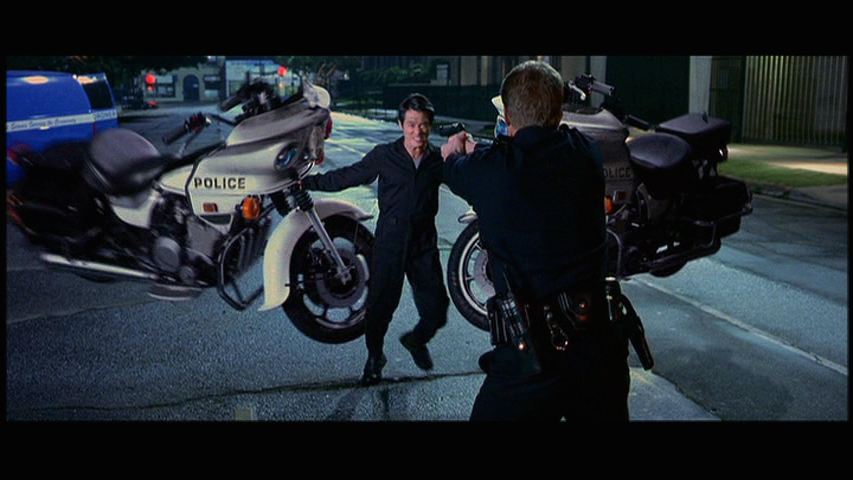
The main plot gets rolling when a few Specials are murdered and it is obvious that one of their own is committing the crimes. This is all narrated by the last living Special, John Simon (aka Poet). John narrates the discovery that, with the murders the energy from the dead Specials is transferred to the remaining ones (Think Jet Li’s great film The One).

vlcsnap-2011-09-08-03h45m01s97

Like this, but Jet Li has the skill set of a Super Saiyan.

This is just the tip of the iceberg and the reader gets to go on a special journey in the lives of superheroes, which is watching their full lives begin and end. Specials have all the power in the world, yet they have the same limitation normal humans do: time. Another underlying tale unfolds as well, which is how humanity would try to deal with suddenly falling from the apex predator perch.

Art

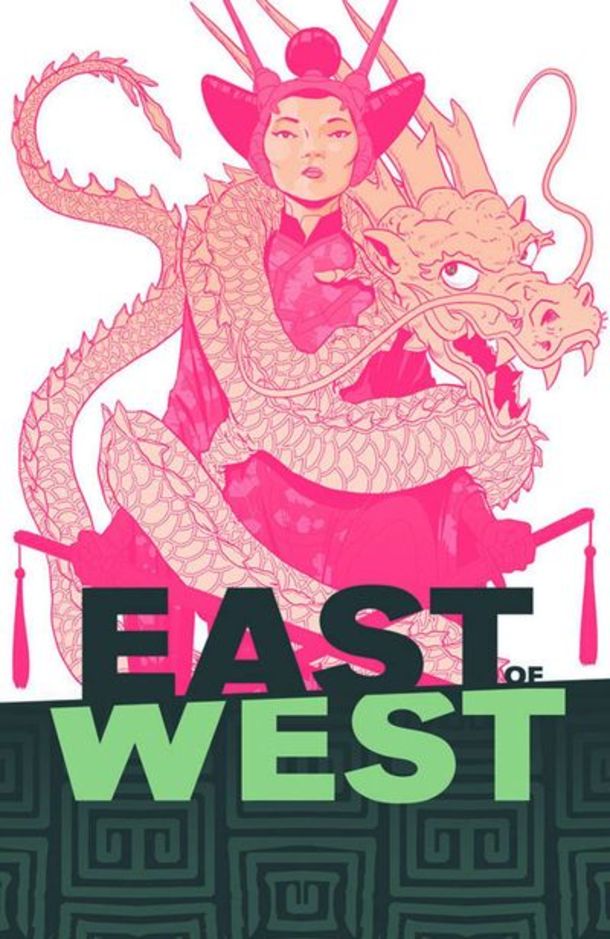
The art here isn’t really impressive. It isn’t bad, by any means, but the coloring and artwork definitely feel like a typical comic book. I would say if you were playing a game of charades and had to draw comic characters, Rising Stars would be the perfect point of reference. Held up next to League of Extraordinary Gentlemen, or East of West it fails to have that same visual impact.

rs09-lg

Cap’n Muurrca

Characters and Writing

Considering there are a mere 24-issues and three mini-series to get acquainted with the Specials there is a lot of ground covered. 113 is an impossible amount of characters to introduce and give personality to and intelligently author J. Michael Straczynski doesn’t attempt to. Each of the Specials mentioned in-depth in the comics are all interesting and either have powers you need to actually see to understand or have personalities so strong that you want to know what makes them tick. The inclusion of archetypical superheroes is also done intelligently. How would a real Batman act? You get to see it here. What would someone with multiple-personality disorder do with the ability to control other? Also in here. I found myself loving and hating characters and then merely understanding them by the end of the series and I loved it.

Worth the read and time to complete?

My God, yes. This feels like a brilliant deconstruction of the fantasy of superhero living a la Watchmen (not saying it is as good or anything). There are 24 issues and it really makes you think about what life would be like if you did have amazing abilities but knew you’d die at 70. My only complaint is that it does end very neatly, but I would prefer that over feeling unfulfilled at the end.

Brent Hopkins considers himself jack-o-all-trades and a great listener. Chat with him about his articles or anything in general at brentahopkins@gmail.com.

Images: Header image from here, other images here and here

Life After the Star Wars Expanded Universe: Ridley Scott’s Blade Runner

Blade_Runner_poster

Andrew Findlay

In Life After the Star Wars Expanded Universe, we take a look at science fiction and fantasy, why they’re great, and what they say about where our species has been and where it’s going. 

There are four possible responses to the question “What do you think of Blade Runner?” One is “I enjoyed it,” to which the correct response is “Yeah, me too.” The second is “I haven’t seen it,” to which the correct response is “You have a finite span of time on this Earth, and you are using it poorly.” The third is “I do not know what that is,” which, honestly, why do you know this person? The fourth is “I did not like it,” which, good Lord, what is wrong with humanity?

Blade Runner is without a doubt one of the most polished science fiction films of all time. It made kind of a weak showing at the domestic box office, but its influence spans decades and it makes appearances on most “Best Movie” lists, from Time to AFI. Its initial cult status and later critical success spring from Ridley Scott’s genius worldbuilding. In and around a satisfying film noir shoot-em-up, Scott weaves a vivid world dripping with the ominous tones of the film at large.

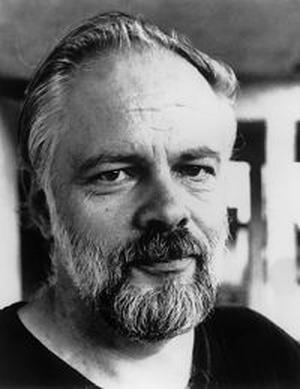
Before getting more into that, I want to talk about the weirdness of the other mind involved in the project, Philip K. Dick. Blade Runner is based on PKD’s 1968 novel Do Androids Dream of Electric Sheep?. Both the film and the book deal with the question of what constitutes humanity, and what happens to those who do not make the cut. These concepts are pretty vanilla compared to PKD’s other work, in which protagonists regularly consider not the authenticity and substantiveness of their fellow humans, but of reality itself. In Ubik, the protagonist jumps multiple realities and has no way of knowing which one is “real.” In “The Adjustment Team,” (released in theaters as The Adjustment Bureau) the way reality and the world are is under the control of an unseen organization that completely, and completely behind the scenes, manipulates events. This sounds insane, right? That might be because Philip K. Dick was a little crazy himself. He spent the last years of his life convinced that an entity called VALIS was communicating with him via a pink, information-rich beam of light, and that he was leading a dual life: in one, he was an author in the 20th century, and in the other, he was a persecuted Christian living in 1st century Rome. Yup. Whatever – his perception of the world led to a lot of inimitable SF.

PhilipDick

Hollywood has made so much money off of this man’s insanity

The story of PKD’s life is so appealing in an ironic tragedy way because he spent most of his life poor as dirt, even while writing like a fiend. The stories and novels that were being accepted by publishers were not making him a lot of money, partially because they were genre publishers, which did not pay nearly as much as mainstream. After going through a fairly rough life in which he experienced five broken marriages, anxiety and other mental problems, and a disheartening lack of commercial success, he died right before Blade Runner was released. The irony is that while living, his art won him little money, but posthumously his estate has overseen the transformation of eleven of his books and short stories into major motion pictures. For comparison, Stanley Kubrick only has sixteen directing credits. The gap between PKD’s level of success while alive and while dead is absurd.

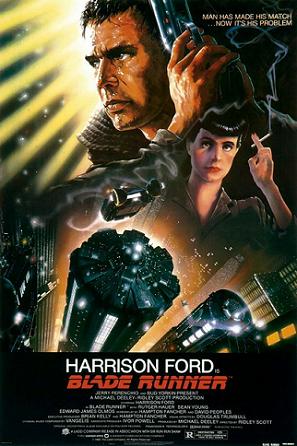
Blade Runner initiated this posthumous stream of cash from Hollywood to PKD’s descendants. It is a very well-put-together tech-noir film, in which one taciturn guy, Harrison Ford, is pulled back into the police force he has retired from to hunt down androids escaped from offworld colonies. Androids do not have the same emotional responses as humans, so “blade runners” (those tasked with hunting androids) administer a special test that measures iris contraction, breathing patterns, the blush response, et cetera. If you pass the test, you are human. If you do not, you get shot. Sure, this movie is exciting or appealing every second of playtime. Sure, Harrison Ford playing a cynical ex-cop is perfect. Yes, the reflections on what life means and the internal struggles of a constructed entity are important. What gives the film most of its power, however, is Scott’s painstaking, industry-changing construction of LA in 2019 (ha).

Blade_Runner_spinner_flyby

This is what LA is supposed to look like in five years.
Scott’s future LA has people swarming in the streets, monolithic, light-blocking buildings, heavy Asian cultural influences (multiple times the protagonist stops to get noodles for fast food, and English is not necessarily the most common spoken language). Genetic engineers have become so talented that they can create human eyes, bodies, and brains. Flying cars are happening, which, why does everyone think flying cars will be a thing? The differences in technology and culture are only part of what Scott accomplishes. His set design is astounding. In all the exterior shots, we see an LA swarming with people, close packed in the alleys, standing in the rain. Sunlight never makes an appearance in this film. Buildings are monolithically, absurdly huge, plastered with massive moving billboards advertising common products. All of this is so well-done and so threatening the environment itself is almost another character in the film. The strange appeal of the environment is part of what established this movie’s initial cult reception, and I think part of that appeal comes from the plausibility of the imagined future. Urbanization exploded in the mid 20th century, and a few years ago we just crossed the line where now more than half the people on Earth live in cities. As this trend continues, it is absolutely believable that future cities will be dark, dank, crowded, and menacing. Here’s hoping we are headed to a future with the flying cars and without the dense mass of desperate humanity swarming through a bleak cityscape.

Andrew Findlay has strong opinions about things (mostly literature) and will share them with you loudly and confidently. You can email him at afindlay.recess@gmail.com.

“East of West” Comic Review: Art that Shushes Your Inner Critic

east-of-west-3cover-artjpg-30b4bb_610w (1)

Gardner Mounce

As we consumers of culture grow older, our inner critic grows louder. A new band we might have liked ten years ago we now quickly brush off as a carbon copy of an earlier incarnation. The latest Coen brothers’ could never be as good as past efforts. With every passing year, we append new cultural experiences to our collected “Experience,” thus making it increasingly rarer to experience that work of art that shushes your inner critic so that you can actually enjoy it. Not to say that critiquing (or even tearing apart) works of art isn’t its own form of enjoyment. But that’s for another article.

STK527769.jpg

It wasn’t until undergrad that I got into graphic novels. It wasn’t until after grad school that I got into comic books. If you don’t know the difference, here’s a clip (courtesy of ABC Family) of someone asking the question and then two people kissing. All that to say, even though I haven’t been a lifelong fan, I feel that I’ve read enough to know when I’ve found that rare specimen. That specimen, in this case, being Jonathan Hickman’s and Nick Dragotta’s East of West.

How to describe it? I use the word “badass” selectively. Sure, I live in the South where badass is an endearment ascribed to everything from camouflaged iPhone cases to comely sunsets. I used it once at a Nine Inch Nails show when Trent Reznor kicked over his keyboard, and in spite of myself at a monster truck show when Grave Digger jumped an improbable number of wrecks. Like I said: I’m Southern.

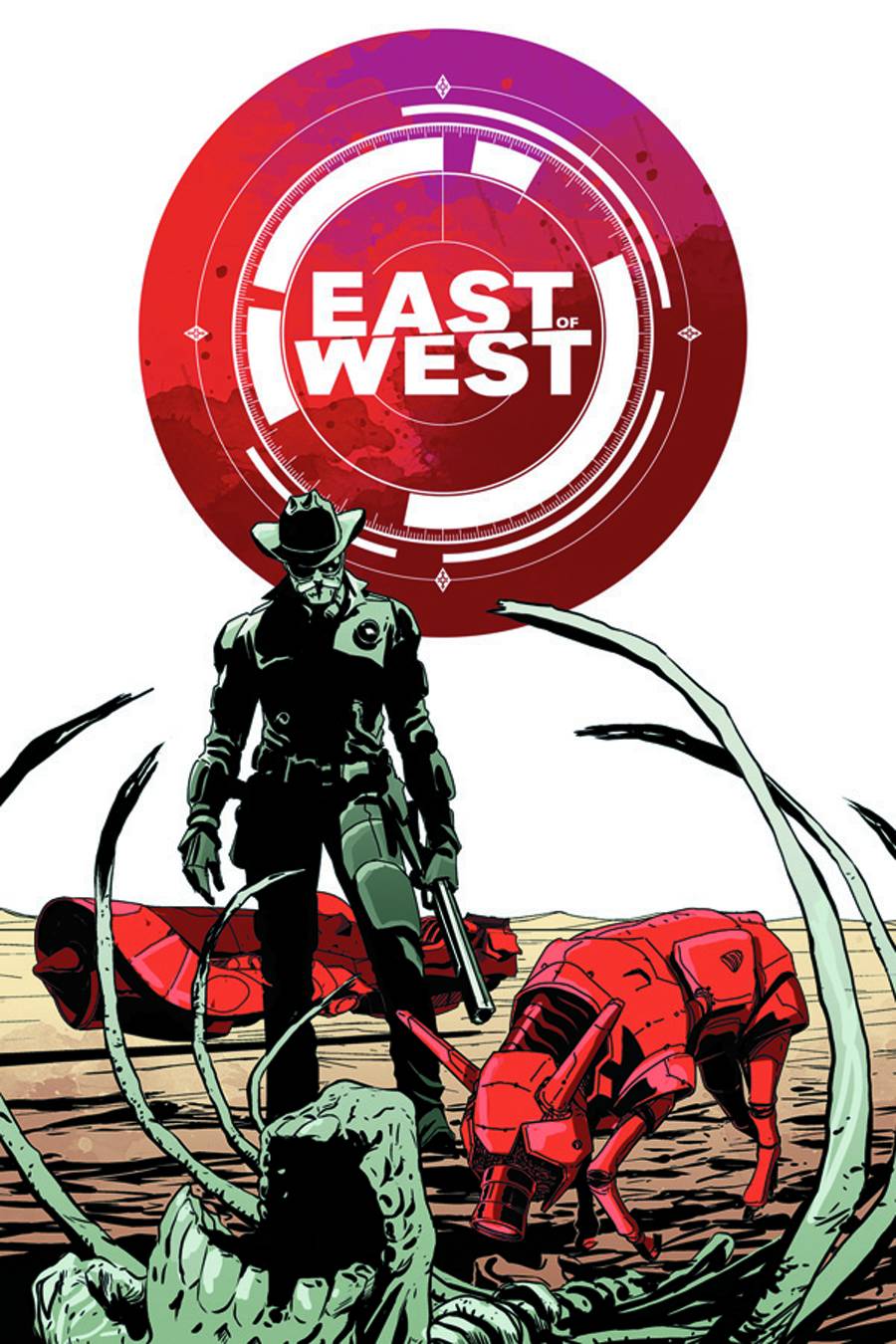
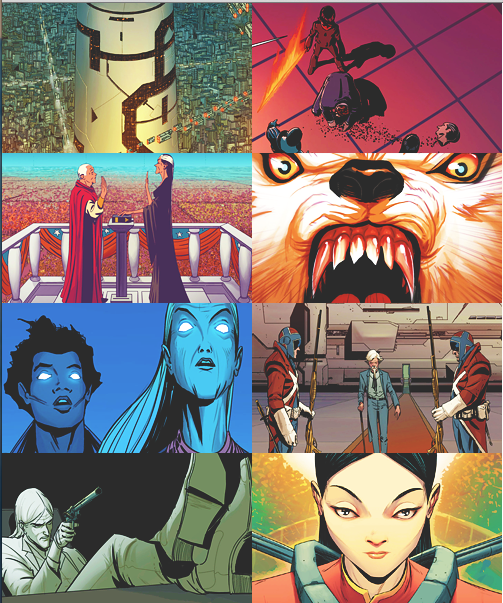
I think I want to give East of West that most Southern laurel because of how much weight Dragotta’s art carries, how every panel is filled with gravity and action and consequence, with no frills, nothing wasted. It’s like reading the storyboard of a Darren Aronofsky film: every shot means something. The following is a collection of unrelated panels (no spoilers) that I’ll use for example. Every shot is packed with a story that demands to be read, understood, savored.

Screen Shot 2014-06-10 at 5.10.11 PM.png

It’s the color palette, it’s the framing, it’s the energy in each panel that whispers “I know something you don’t know”, and so drives us onward. Dragotta fully realizes Hickman’s dystopian sci-fi world, a grand scale epic that includes vast cityscapes, a cadre of unique characters, and wonderfully offbeat technologies like horse-bikes. It’s artwork like this that primarily hushes my inner critic. Even if the story wasn’t good, the artwork alone sweeps you up. But the story. Oh, man, the story

If Sturgeon’s law is to believed, 90% of everything is crap. This is definitely true for comic books, where at least 80% of comics are about superheroes with dead parents–nothing lightweight about dead parents, but come on, comic book writers, pick a new backstory for Chrissake. The story behind East of West is…complicated. In a nutshell, it’s a dystopian sci fi story about three of the four horsemen of the apocalypse–Famine, War, and Conquest–who arrive on earth to end it all, but the fourth horseman, Death, doesn’t show. Death, personified as a colorless Clint Eastwood-esque cowboy, is off on an errand of his own. As the three horsemen track him down, elite members of the warring nation-states plot to end the world rather than settle their differences.

What makes the story so special is that Hickman embraces the essence of American mythology: there is not one, but many American mythologies. Contained in East of West is the myth of the cowboy, the religious zealot, the industrialist, the South vs. the North, the South (white wealth) vs. the South (free slaves), tradition vs. technology, the indigenous vs. the immigrant, and more. Hickman collects these multifarious mythologies and we get to watch them squirm. As crowded as that sounds, as rife as that premise is with the potential to wholly miss its mark, it somehow doesn’t. There are worlds contained in East of West, and, so far, its creators have told its story well enough that when I open up a new issue, my inner critic takes a walk.

Where to Start?

Luckily, the series is only 12 issues in. Get the first five in trade paperback for under $9 on Amazon or for around $10 at your local comic book store.

Gardner Mounce is a writer, speaker, listener, husband, wife, truck driver, detective, liar. When asked to describe himself in three words, Gardner Mounce says: humble, humble, God-sent.

Image: IGN

Comic Review: The League of Extraordinary Gentlemen (1999-2007)

league-of-extraordinary-gent

Brent Hopkins

The League of Extraordinary Gentlemen is probably best known for the horrible, career ending movie that starred Sir Sean Connery in his last major motion picture. The movie is a disjointed mess and takes almost nothing from the source material other than the characters’ names.

The comic, on the other hand, is an interesting romp with an entire world built around it. The main concept of the comic is that many literary fiction characters are actually real characters that have retained their otherworldly abilities. They come together as a crime-solving troupe, but, as they are human, they retain all of the issues they have interacting with one another and overcoming being better than an average human.

The Story

Written by Alan Moore (of Watchmen and various other comics fame) the story follows Mina Harker, Captain NemoAllan QuatermainDr. Jekyll, and Hawley Griffin from 1898 to 2009 solving crimes with antagonists from literary history. These include Fu Manchu, Professor Moriarty from Sherlock Holmes, and even the aliens from The War of the Worlds.

download (1)

Characters and Writer

The protagonists are often seen as interesting, but not entirely bad, in modern culture. Moore is not that type of writer, and each of the “heroes” in this comic are, for lack better phrasing, miserable fucking bastards. Each of them exploits their myriad abilities in exactly the worst ways possible — murdering, drug using, and raping — because there is no one that can truly stop them. They get a completely free pass on this, because when aliens come from Mars and threaten to liquidate the entire human race you have to let the superhuman characters handle it.

There is quite a bit of death in this comic and it is dished out to the good and bad alike. The strange thing is I never really connected with the good guys because they were all pretty deplorable people in their own right.

Art

The art is done really solidly throughout. There is only one artist from start to finish, so it is very cohesive. Those that like steampunk flair will adore this, as the whole span of time from 1898 to present day has a decidedly steampunk feel. The comic consistently feels like a viewing of the imagination of someone reading a book, which is precisely how it should feel. The characters are all very unique and it feels like you are viewing a real alternate timeline where pen and paper make reality come to life.

Writing

Moore is a world builder. He has done this with Watchmen and here he has managed to do the same thing. While The League of Extraordinary Gentlemen isn’t long per se, Moore includes so much side text and so many appendices from the world that you never really feel lost. These are necessary reads to get the full effect of the world these characters reside in and they are entertaining in their own right. Each character is also consistent throughout the story, never suddenly becoming more than they were like many superhero novels do. Once insane, always insane, and that helps engross even more.

Worth the read and time to complete?

Kinda??? I read this in its entirety in about two weeks and I did enjoy it quite a bit, yet it is hard reading something with a bunch of people you don’t entirely like. The main characters are Allan Quartermain and Mina Harker and they’re relatively interesting, but their cohorts were far more intense and crazy which made me sad when they departed from the story (These departures are amazing though).

Brent Hopkins considers himself jack-o-all-trades and a great listener. Chat with him about his articles or anything in general at brentahopkins@gmail.com.

Images: Litreactor and Indiewire.

Obvious Child is a Romantic Comedy About How People Actually Meet. Should You See it?

obviouschild

Alex Russell

In our rarely-running kinda-series Should You See It? we talk about movies that just came out. You can figure out the rest of the premise from the title of the series. That’s right: we talk recipes. Should you see Jenny Slate’s romantic comedy Obvious Child?

One of the weirdest parts of pop culture now is that if you really love something, it starts to feel like it’s one of the biggest things in the world even when it isn’t. You can follow a hashtag or go down a Tumblr or YouTube hole and suddenly that one Comedy Central show you really, really like feels like it just must be something everyone you know is all about.

Obvious Child inundated my digital life last week. It’s a movie that did well enough at Sundance earlier this year to earn a bigger release this month. Jenny Slate (Kroll Show, Parks and Recreation, Bob’s Burgers) did a sort of “comedy nerd” press junket to promote it on a lot of podcasts, but it’s entirely possible you haven’t heard much about it.

Jenny Slate plays a stand up comic who gets dumped after being too open on stage about her relationship. She’s in that mid-20s period where people have to make decisions about how to stop taking money from their parents, how to have a stable relationship and still be their own person, and how to get and keep a job that doesn’t suck. It’s a relatable premise.

Then, well, let’s get this out of the way: even though the director has said it’s not “an abortion comedy,” it is definitely a film that deals with abortion. Jenny Slate’s character has a one-night stand and decides to have an abortion. That’s not giving anything away; it’s the hook of the whole experience.

Questions come up. How do you have a conversation about this with someone you don’t know? How do you tell your parents? How do you tell your friends? How do you tell a group of strangers that you talk to with a microphone?

Obvious Child will rub people different ways based on their feelings about abortion, but it may also have the same effect based on how people feel about relationships in general. Jenny Slate’s character is funny and goofy, but she’s also “independent” even though that word has lost some specific meaning in some ways. The portrayal of her decision to have an abortion is absolute; she asks a friend if the experience hurts or not, but it’s clearly not part of the decision. This is not a movie that wants to tell you if you should have an abortion or not, but Jenny Slate’s character is a look into what the process looks like for someone who has their mind made up.

Should You See It? 

Well, someone sure should. Obvious Child made $133,000 this weekend in 18 theaters. It’s still in limited release (Frozen is still in more theaters than that in week 30 of release and The LEGO Movie is in over 15 times that many in week 20) but you should try to see it if you can. It’s an extremely refreshing romantic comedy both in subject matter and in characterization; these are real people who meet because they get a little drunk and flirt with each other. Every movie should try to show an interesting version of an emotion you understand or feel on some level, and the weight of an important decision when life is already weighing very heavily is spot damn on for that.

Obvious Child is in limited release until June 27, when it is released everywhere. See the trailer here.

Image source: Sundance