bad movie

2023 in Review: Every Movie I Watched, Ranked

I have kept a “to watch” list for a decade now and I finished it in 2023. My goal for next year is to do less list making, which is a big challenge for me with the way my brain works. I watched 56 movies for the first time this year, which includes a few I had seen at a young age but didn’t really remember clearly. Maybe that’s cheating. I make the rules, here.

This year’s list includes a deep dive into the Sight and Sound list from 2022 of the greatest films ever made. Previously I’ve used lists like this as checklists, but I am really going to try to not do that next year. I want to watch what I want to watch. Some of that will be the acclaimed stuff and some won’t. We’ll see how that goes one year from today.

I am surprised at how few of these are new. Only five of these came out this year, but I liked all five of those. I am going to watch everything nominated for an Oscar as I typically do once they’re announced at the end of January, but otherwise I want to let the Criterion homepage guide me a little more than usual this year. I also aim to write more here, but we’ll see if that happens or not.

I hope you loved what you saw this year. Drop suggestions in the comments or just disagree with my takes. All are welcome.

As is tradition, let’s rank the new watches (also available as a list on Letterboxd, if you do such things or want to follow me there):

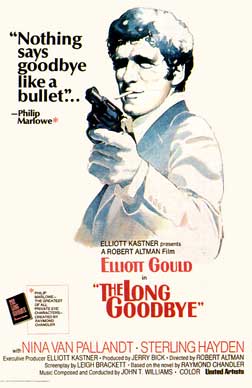
1The Long Goodbye

This is a crazy choice for my top spot, I know, but I would be lying if I picked anything else. An acclaimed director who has made masterpieces and bombs once said he sometimes makes movies and sometimes makes films. The Long Goodbye is a movie, not a film, and it is one of the best ones ever made. It’s a quintessential 70s film with Elliott Gould doing Elliott Gould stuff as an updated take on Philip Marlowe and it drips with style. This is among my favorite genres and I just cannot believe how hard this one hit me when I saw it. It’s not the accomplishment a lot of movies on this list are, but I truly did not enjoy any experience more than this in 2023.
2News from Home

Director Chantal Akerman is a legend but is more famous for another movie we’ll talk about a lot more later in this list. After seeing her masterpiece, I wanted to watch the other film she’d made that interested me and I think it is a tremendous amount more interesting. The premise of News from Home may not grab you, but resist that. It’s a series of shots of New York City paired with letters the director received from her mother in the early 70s, before she directed a movie a lot of people would contend is the greatest film ever made. The delivery method here is as incredible as the content itself, as you slowly get a picture of how these two relate and never see the other side of the conversation. This would seem pretentious or inessential in other hands, but I really was consumed by it as it ended. This won’t work for everyone, but if you think it might, you owe it to yourself to try this one.
3A Man Escaped

A masterpiece by one of the greatest directors of all time. A story of a jailbreak, but also of the power of pacing and how to show that locked-in feeling alongside the stolen moments it takes to do something methodically and not get caught.
4Come and See

I’d put this one off for more than ten years. It’s been called the most devastating and upsetting movie ever made. It’s been called the ultimate war movie to end all war movies. It is all that and more. I was horrified and upset and mesmerized. Pick a quiet moment and really engage with this one. It’s so violent and so dark but so worthy of your attention and your consideration.
5The Banshees of Inisherin

I don’t know if this will sparkle like this years later. The extreme display is very extreme and could seem silly if you didn’t truly care about the interpersonal conflict at the heart of this one. An obvious sister film with In Bruges given the cast, this is a totally different story with a lot of the same emotions. Male friendship gets a lot of play in discourse these days, both ironically and not, and I think this is a genuine way to talk about it even with a hyper-ridiculous consequence in the middle of it all.
6Barbie

I have very little to add to what has already been said. I couldn’t believe Barbie was what it was when I saw it. It deserves to be where it is on all the lists and it is a truly unique, surreal thing. I’ll be really interested to see what the Oscars do with it.
7Asteroid City

I think too much has been made of the style of Wes Anderson. It’s obviously the immediate takeaway, but that style is in service of something. Asteroid City is his best movie in years and I don’t really trust anyone’s opinion who writes it off as pretty meaninglessness. I saw few things that made me feel the way this made me feel this year.
8Grand Illusion

Jean Renoir is one of the most revered directors of all time, and I really did not get out of his other masterpiece what everyone else gets out of it. I was pleasantly surprised that La grande illusion had the opposite reaction. This is a war film about duty, station, and country, that’s also more complicated than a lot of the sweeping epics we still get nearly a century later. This is a great watch and doesn’t feel as weighty and plodding as some of the more complex class parables of the day.
9Children of Men

I put this off because people said it was heavy, but it’s on too many modern classics lists for me to avoid it. People are right, this is very upsetting and the ending is overwhelming. It’s great, but you know that, don’t you?
10Black Girl

There are terms like “world music” that inherently reinforce the centrality of our own, American experience in the way we view the world. Director Ousmane Sembène was asked if his films were understood in Europe and told the interviewer “Europe is not my center. Europe is on the outskirts of Africa.” He said this in French and pointed out that he spoke their language, but they did not speak his. You can watch La noire de… in about an hour. I don’t know that there’s a better hour you could spend, if you truly are interested in broadening your horizons. I don’t pretend to have an awareness of African film, but this is a great place to start.
11La notte

I watched Antonioi’s trilogy for the first time this year and I liked La notte the best. This is the story of one day and night and the journey of all the years that lead people through one short experience that reflects so much more. I encourage any serious film fan to watch all three in order, but I got the most out of the middle one.
12The Battle of Algiers

A truly effective protest film and an impressive accomplishment in both scope and message.
13Chungking Express

After seeing other Wong Kar-wai films, I should not have been surprised at the twist of this one. Still, I was charmed and enthralled. This is a great one and one I’ll revisit.
14L’avventura

The first of the Antonioni trilogy is the most straightforward. A woman goes missing during an adventure. Two of the searchers have to determine what is too far to go to find her and is it okay to move on without her. Even beyond that, what does it mean to have moved on?
15Eraserhead

My slow march through David Lynch’s filmography continues. I was surprised to find that Eraserhead is even more inscrutable than I expected, even given the reputation. I love Twin Peaks a lot and always get something out of the director’s films, but there’s just so much in here that feels designed to not even really evoke an emotion. I loved the experience as a whole but the more I reflect on it the more pieces of it feel just disjointed and inexplicable. But the whole cannot be denied and is worth considering.
16Daisies

Daisies was not even on my radar before this year but I watched it on recommendation from the aforementioned list. It’s an insane, expressionistic journey where two women muck up the world around them and ponder their place in it. The ending here may strike some as heavy-handed, but I loved it and I felt like it drove home the point. Worth your time and quite a visual marvel.
17Throne of Blood

Even if you’ve seen a lot of versions of Macbeth, this one is a fantastic one. What a performance from a master, too.
18Glass Onion

I loved this a lot but I understand why some people didn’t. I was charmed by most of the performances and I really loved the mystery. I don’t really think you can ask for more than that here. I’d watch ten more of these.
19La strada

Deeply sad in the best way. An absolute gut-punch and a knockout set of central performances. An all-timer for a reason.
20The Passion of Joan of Arc

This is a lot of people’s pick for the greatest performance on film ever. Godard even had one of his characters go watch it and be moved by it as a centerpiece to one of his films. It holds up remarkably almost one hundred years later and it really is moving.
21Cléo from 5 to 7

There are so many movies on the lists of great movies that detail the life of one woman in Paris in the 60s and 70s, but this may be the best of them. The story of one day’s wait for a vital test result is so much more.
22The Boy and the Heron

To be honest, this may be more style than substance. For a director who has given more to animation than almost anyone to ever live, that’s hardly a bad thing. Miyazaki’s latest (and last? maybe?) film is beautiful and shocking and surprising and, honestly, messy. It crams a lot of the story into the last 20 minutes and seems to have left a lot of people cold. There is deep emotion here and a lot to explore about grief, but I don’t think this will end up being one of the master’s best films. It is absolutely stunning to watch and is still a fabulous thing, it just doesn’t have the magic trick a lot of the best Studio Ghibli films do.
23Contempt

I liked a lot about this one from Godard, but I always find myself taking a second to remember which one this is. It’s similar to a lot of the other films about film from the time, but the central interpersonal problem here feels real and Brigitte Bardot is great in it.
24Wanda

There are a few movies that Criterion suggests all the time. This is one of them. I watched it totally cold and I recommend you do that, too. Barbara Loden made this largely as a one-woman army, directing, writing, and staring in it, and her character is so baffling but so relatable at the same time. There are a ton of movies like this, but few that embody this quality of a person forgotten by the world but still forced to engage with it.
25Ikiru

Ikiru is a classic and a top-ten movie on a lot of lists. I enjoyed it and I recommend it. Roger Ebert recommended rewatching it at different eras of your life and I can see the appeal. I have to say that this year was a strong one and I loved most of what I watched, so forgive a few masterpieces being down here in the 20s.
26La dolce vita

Similarly, forgive me, but it’s no insult to list it here. I obviously recommend you watch this if you haven’t, as it does a great job of going back and forth between agreeing with and mocking the protagonist. That’s a great trick that more movies about ennui could stand to steal.
27A Woman is a Woman

There’s a lot to love about this growing argument between Anna Karina and Jean-Paul Belmondo, two staples of the time that are great in everything, and I think parts of this jump off the screen and demand your attention. It wanders towards an ending that I don’t personally feel pays off the journey, but I did love the journey.
28To Leslie

I’m a huge Marc Maron fan and I think his performance here is great. The legacy of this movie is going to be the weird Oscar campaign, but it’s a really solid story about redemption and a small piece of the way we all take back our lives. I liked it a lot.
29Hiroshima mon amour

It’s too common to call movies “a vibe” but whew, this one is certainly that. Worth experiencing cold.
30All Quiet on the Western Front (2022)

I loved this when I saw it, but with a year to reflect it’s mostly in that first bit and some of the more shocking new scenes, like when an officer tears the names out of old uniforms to hand them to new recruits. We’re left to confront what we already know but is new to these people marching into a war often remembered in scale and scope beyond imagination at the time.
31Shin Godzilla

I don’t have much to say about this one. It’s just a really good watch.
32Oppenheimer

Probably the favorite for the Oscars this year, though time will tell. I think it has the same problem almost every Christopher Nolan movie has: pacing. It’s great, obviously, and the main performance is a standout, but I found it hard to love the back half as much as the front half. I think a lot of reductive criticisms are frustrated with the choice to hold the camera after the bomb itself, but rather than that I was just more frustrated with the drag you feel as the narrative dips and peaks over and over after that. I can’t imagine rewatching this, even though I think it’s a great film.
33Nightmare Alley (1947)

I loved the remake so much I figured I’d watch the original. It’s remarkably close, though I think the remake improves enough to make it a better film. This one’s great, though, and it’s a lot tighter.
34Women Talking

The message is important and the performances are strong, but there’s a real trend in the last few years of more great movies opting for this play-like design and it makes a film feel very structured and storyboarded to me. I appreciated this movie a lot more than I enjoyed the experience of watching it.
35Jeanne Dielman, 23, quai du Commerce, 1080 Bruxelles

This was Sight and Sound‘s new number one greatest movie ever made, so I finally blocked the time off and watched it. It is very divisive as a number one choice, but anything would be. It’s more interesting that it is divisive even as a classic. It inspires a lot of one-star reviews from viewers who want to see the greatest movie ever and are not ready to engage with an extremely long, extremely slow look at the daily life of a woman with just one slight difference from the average homemaker. The complaints about lengthy, wordless shots of a woman making meatloaf miss the point. That said, even as a movie designed to make you sit in the reality of those slow moments, it’s unbelievably slow and you need to be ready for what it means to engage with it. There’s a visible boom mic in the middle of an outdoor shot at one point, so standing this up as a perfect, unassailable film is a ridiculous endeavor. It all comes down to if you are moved by the climax (which you should be) and if you have the patience for the journey (which you might not). I think it’s hard to argue that making this the number one is a pretentious choice, but I’m glad I experienced it even if I didn’t always love it.
36McCabe & Mrs. Miller

I liked some elements of this but it was a little bit of a tough hang for me. I need to revisit this.
37Amarcord

Fellini at his most over-the-top. Fantastical and ridiculous on purpose. Parts of this are great, but whew boy, some of it is just too much for me.
38Top Gun: Maverick

I liked it fine. It’s exciting and a little forgettable.
39Top Gun

I hadn’t seen Top Gun since I was a kid and I did not remember it being like this. Parts of this are really wild to watch in 2023, but it really does still hit a few high notes.
40The Venture Bros.: Radiant Is the Blood of the Baboon Heart

I loved The Venture Bros the show and the culminating movie does a good job tying up a lot of the story. Would be completely meaningless to anyone who hadn’t seen all of the show, so down a few rungs just because of the esoteric nature of something like this.
41L’eclisse

The third part of the Antonioni trilogy just didn’t work for me. The ending is supposed to be a masterstroke of arthouse cinema and I didn’t like it at all. I watched the last 20 minutes twice. Eventually I’ll revisit all three and maybe it’ll click then, but I think the first two are works of genius and the third one is a flicker at the end.
42Andrei Rublev

This three-hour, multi-chapter epic about faith and dedication really tried my patience. I loved Stalker and Solaris, but I had some trouble getting there with Andrei Tarkovsky’s more personal works (more on that later in the list). Some chapters of this really blew me away, especially the last one, but some parts of it felt difficult to sit through. I recommend it if you’re really interested in a faith journey but it really did feel very long to me at times.
43Tokyo Story

Every year there’s at least one undisputed masterpiece that doesn’t really click for me. I liked this movie a lot, but if I didn’t know the reputation I would never have guessed this is heralded as one of the absolute best movies ever. I wonder if I hadn’t known that if this would be higher or lower on my list? Probably higher, which makes me think I definitely should revisit it.
44Imitation of Life

Every old-timey story about race has some fascination to it for a modern audience and this is absolutely no exception. Some of this is remarkable, some of it is not.
45Bug

Watched as part of a series at my local arthouse theater where they’re showing every movie to ever get an F rating as part of CinemaScore’s audience rating card system. People were shocked and frustrated by the ending when they saw this and they were absolutely, real-deal right. The ending is a mess, though the overall feel and the strange devolution of this one is worth the runtime.
46The Fabelmans

The twinkly, not-at-all-realistic performances here are part of the point in how we remember our own past, but they’re super distracting and weird. Bonus points for David Lynch in a memorable cameo, but I could not get over how absolutely bizarre everyone is in this movie, even if that’s on purpose.
47Elvis

Austin Butler does a great job and Tom Hanks does a bad job. Way too long, but surprisingly better than expected, overall.
48Gloria

More weird than bad, but the child acting in this is, and I mean this, the worst I have ever seen in any movie.
49TÁR

The performance is strong, but the message here feels thudding and overwrought. I didn’t love it, but I have come around a little bit on it since my initial frustration.
50Triangle of Sadness

I love the first thirty minutes of this one and I think the last twenty or so is really strong, but the class consciousness message in the middle is so direct that it at times stops even being a narrative. There’s a lot here that’s funny and interesting but the connective tissue made me groan too often for me to not put this towards the bottom.
51Avatar: The Way of Water

Fine. Probably better than the first one, but also very much like the first one. Way, way too long.
52Meshes of the Afternoon

I don’t know what the right spot for this is. This is an all-time piece of short film but it didn’t have the desired impact on me. I try to watch a few short films every year and I did not really love this one. I know that’s probably on me, but it didn’t move me the way it moves other people.
53Mirror

Views on Mirror vary wildly, with people saying it’s either Tarkovsky’s greatest work or nonsense. I fall in that second camp. I will definitely revisit this because of my love for some of his work, but I found this to be impenetrable. I didn’t even hate it so much as resisted it. It happened, in front of me, and I continuously tried to consume it and was unable. It is easy to see a movie like that and say there is nothing to get (as I feel sometimes about true arthouse stuff like Last Year at Marienbad) but I know that can’t be true here, right? It demands another attempt.
54The Whale

I don’t really have anything to add to the discourse. It’s just overwrought, by a lot, and it just builds and builds until a truly insane, unearned ending that is shockingly weird. There are some interesting elements, but no, no dice.
55Rudy

I saw this as a kid and watched it one night this year when my wife wanted to watch it. It’s really bad. The message is a bad one and the delivery is even more twinkly than I remembered.
56Blonde

An easy choice for the last spot. Blonde is a deep insult to viewers and the reviews reflect that with near-universal disdain. That this earned an Oscar nomination is an indictment of the process and anyone’s appreciation of this film is an undeniable strike against them. Whenever I hate something this much I try to think about why that is, but here there are so many reasons it is difficult to engage with the contrary opinion seriously. It’s fully abusive, edging up to the point of torture porn as a piece of art, and is polemical in a shocking, distracting, unnecessary way. I have not seen many movies in my life as disposable and repugnant as this.

2022 in Review: Every Movie I Watched, Ranked

Over the last near-decade, this site has been a place for me to talk about movies as I watch “the canon,” whatever that means, and 2022 was the first time since I started doing this that we got a release of the Sight and Sound list of director and critic top films of the decade. I’ve seen most of the list and I’ll try to see the rest in 2023. We’ll go over the relevant ones here, probably.

Last year I said I’d write a lot more in 2022 and I didn’t. Let’s try again. What more can you do? The only post here in 2022 was my annual review of the Best Picture winner, which this year was Coda. I thought it was fine. It’s probably in the middle of the pack, which hits strangely because the majority of recent choices were so strong. This year, who knows? We’ll review it when it happens, in addition to probably some other Oscar stuff when we get closer to it.

I saw 48 movies for the first time this year (some are new, some are just new to me). I didn’t write about most of these, so this is as much as I have to say, for now. Some of these will make the Oscar nominations, so we’ll revisit some then, as well as some of them in the context of the Sight and Sound list. For now, some brief thoughts.

As is tradition, here they are, ranked:

1The Worst Person in the World

This movie lost the two Oscars it was nominated for to Drive My Car and Belfast and I think, for my money, it’s significantly better than both of them. I also think that’s not going to be most people’s experience and I don’t think it’s really fair, but it is what I feel. When I walked out of Lady Bird five years ago I felt the same way I did after The Worst Person in the World. This is a story that’s not about my experience and a character whose background doesn’t look all that much like my background, but there are human, undeniable elements that I’ve never seen told this way. I don’t know if everyone who sees it will love it or identify with it or admire it or anything else you need to do in order to rank a movie like this as the best film of the year, but there’s nothing on this list I loved more.
2Everything Everywhere All at Once

This will be most people’s top film of the year and I think it deserves it. I don’t have anything to add that you don’t already know. It’s great, but statistically, you already know that. Not all of the slapstick worked for me, but the structure and the tone really make that a minor complaint, and a personal one. What will be interesting is to see if it makes waves at the Oscars. I couldn’t tell you, but I’ll be curious to see if the hype can carry a strange film through our most resistant-to-strange critics. That said, a few years ago they gave Best Picture to a movie about a fish monster love story, so who knows?
3Decision to Leave

I saw this with three people who disliked it. I don’t think “divisive” is the right word, but more “alienating.” There’s not a lot happening in Decision to Leave and the motivations of the characters, specifically, can be frustrating. People don’t act like this in real life, but they also aren’t homicide detectives, usually, so their personal stakes are lower. I think what I love about Decision to Leave is it shows the people around the two central characters and how they frustrated, lost, left to their own conclusions, about two people who become fixated on what they see as how the world works. What’s on the screen in Decision to Leave might be too sparse to be a truly great film for everyone, but I took away something I really liked.
4Nightmare Alley

I struggle to explain why I liked Nightmare Alley so much. It lost all four Oscars it was nominated for, flopped at the box office, and seems to be mostly forgotten already, but I thought it was such a fantastic noir. Maybe I’m a sucker for the genre, but even once you see the ending coming, the knot it leaves in your stomach feels so well-earned. It’s too long, but it feels like that could be said about a lot of movies, and it’s not for everybody, but that definitely feels like it could be said for everything now. If you want something haunting with some strong performances, this is it.
5The Asphalt Jungle

Sterling Hayden is my favorite actor and John Huston is one of my favorite directors, but I’d somehow never seen the classic The Asphalt Jungle until this summer. It’s just a perfect film about a heist gone wrong. There are a half-dozen of these on the list of top films, depending on your list, but this is one of the best and it works just as well today.
6The Wonder

I would rank The Wonder in the top half of my list regardless, but it makes my top ten because of a device I don’t really want to spoil. It’s the story of a religious “wonder” who doesn’t need to eat because of faith and a community that wants to believe versus a world that wants to debunk. The story is worth your time, but it turns over in my head because of a structural choice that I want to leave undescribed. You can’t miss it. Why tell your story that way? And do you believe the simple answer, or is that something more?
7Drive My Car

Drive My Car starts with an incredible opening hour that, over time, becomes a satisfying, but less interesting, conclusion. I loved it, obviously, but I can’t immediately think of another movie with an arc like that. It’s worth seeing and I don’t mean to damn it with faint praise, but it’s really, really fascinating, it’s just slow.
8Do the Right Thing

This is too low on this list for a timeless masterpiece, but that’s why this isn’t an objective list. There are probably only one or two movies on this list that rival this for “importance” and if you see one thing here you haven’t seen, it ought to be this one. I don’t know why I’d never sat down to watch the whole thing and I’m glad I took a Tuesday night and just did it.
9The Thin Man

The origin of the Nick and Nora that give their names to the famous cocktail glasses, The Thin Man is a screwball detective story that’s still funny almost a century after release. I really encourage people to check this out, as it’s breezy and funny and silly and it will really surprise you.
10Sweet Smell of Success

This is one of those movies that’s on every list of essential films and I’d always thought I’d seen it, but I hadn’t. It’s a story about the press and celebrity, but it’s mostly a masterclass in dialogue. It’s snappy and funny but it doesn’t require the caveat a lot of pre-60s “snappy” films do in that you’ll follow it with today’s sensibilities. This is the quintessential version of the form for “biting” dialogue and Burt Lancaster gives an unforgettable performance.
11Blue Velvet

I love Twin Peaks more than I love David Lynch’s film work, so I drug my feet on watching Blue Velvet. I’m sorry I did, because I think it’s really something, as dumb as that is to say in 2022 about one of the best-loved “horror-adjacent” films of our time. Why are people like this, you’ll be forced to ask, but more than that, what could possibly happen next?
12The Power of the Dog

It’s a shame that most of the discussion of The Power of the Dog is wrapped up in a dumb culture war discussion, because I think there’s a more interesting discussion to be had about it. It’s another tortured, understandable, but frustrating protagonist who offers us a glimpse into darkness. There’s something to be learned from why we seek stories like that.
13The Northman

Speaking of the above, The Northman is a similar story with a shocking twist. The visuals and the brutality of The Northman will get all the play, but that twist is worth admission twice over. See it, if you can handle the blood, and see it cold.
14The French Dispatch

Your interest in and your patience for Wes Anderson will determine how much you like this. I think that’s overstated, usually, as most of them have a more universal appeal than the style suggests, but this one is definitely extreme. I liked it and I recommend it, but it will try your patience if you struggle with Anderson’s whole deal in the slightest.
15Putney Swope

I was inspired to watch Putney Swope by the comparisons to one of the final episodes of Atlanta that aired this year and to the excellent Sorry to Bother You. It’s obviously inspirational to both, but it’s also fascinating to watch it for what it was at the time. It’s breezy — honestly, a little exhausting to watch, it clips along so quickly — and it’s worth your time, especially if you don’t know what it is.
16Moana

I don’t know why I hadn’t seen it yet. It’s cute! I know! Get off my back!
17Belfast

I liked Belfast, charming, wistful, brutal, hard, and all. I found I didn’t have anything else to say about it, immediately as it ended, but I think it nails what it aims to do, which is a huge accomplishment for any movie.
18Blade Runner 2049

I love Blade Runner, the original, but I have learned over time that it’s less important to me than it is to other people who like movies I like. I really, truly love it, but I don’t find myself coming back to it or obsessing over the universe. I think that leaves the door open for me to enjoy this sequel more than the average person. It’s flawed and I think someone hating it has room to do so, obviously, but I enjoyed it for what it is.
19La Jetée

La Jetée is twenty-eight minutes long. Go watch it. Don’t read a thing about it. I think this is realistically too low and in the future, this will only go higher on my list. I can’t stop thinking about it.
20The Bob’s Burgers Movie

Bob’s Burgers is the only non-serialized show that I still watch on regular television. I love the world and I thought this movie did a good job with it. There’s really not much more to say than that.
21Bullet Train

I struggle sometimes with movies like Bullet Train. I saw Logan Lucky a few years ago and genuinely felt like it might have been the best movie of the year. It’s obviously not, with shaggy elements that take away from the heist, but it made me feel the same way Bullet Train did. The parts that work end up working so well that it hides all the mess. I realize this isn’t a very good movie, really, but it’s an effective one, which is important for a genre flick.
22West Side Story

I don’t know that we needed a remake of West Side Story, but it’s a fine one.
23The Tragedy of Macbeth

I didn’t intend for this to be the middle point or so, but it feels right. There’s enough here that it’s an interesting version that feels classic and modern at the same time, but I can’t imagine ever watching this again or wanting anything else out of it.
24Alphaville

There is much to be learned from Godard’s sci-fi-nightmare-world of Alphaville and it’s a classic piece of the genre’s history, but at times it feels more like a piece of history than a film to watch today. I suggest everyone see it, but it falls into a category with films like Playtime to me, where the lessons of the originals have been somewhat usurped by the generations that came after it if you see them first.
25A Woman Under the Influence

Fans almost always list A Woman Under the Influence as the best Cassavetes film, but I don’t think so. I think it shows the worst of the director (overlong scenes that accomplish the same thing again and again, improvised-or-hopefully-improvised inane small talk) as well as the best (two central performances that drive the whole thing, strange-but-memorable side characters). Peter Falk and Gena Rowlands are excellent, but this is so, so long, and critics at the time thought it was a lot. Over time the tone on Cassavetes has settled on “genius” and I do think his films are worth a watch, you will feel the weight of the cruft that people tend to explain away.
26The Rules of the Game

This is frequently listed as one of the best, if not the best, movies of all time. That urges one to put a movie very high on a personal list, but at the risk of sounding dim, I found it a little slow for a modern audience. You have to step outside of your current world and you have to view a movie like this for what it was when it came out, but realistically it’s a much more interesting movie to study and to learn from than it is to watch.
27Coda

This is the only one I wrote about at length this year, which you can read above. As I’ve said before, and with some distance now, it’s a fine film. It still feels “safe” to me, which is not really a fair criticism, and you could do significantly worse.
28See How They Run

A forgettable, but funny, little mystery we watched on a whim one weeknight. It’s fun, but you don’t need to see it.
29Ali

Ali came out the same year as Training Day, so Will Smith was never going to win his Oscar for this one, but it’s also interesting to see the choices made around Smith’s performance. Roger Ebert said this film lacks what made the real Ali so fascinating and maybe that’s true. Ultimately I think there’s too little of the best parts of Smith’s performance here, but it’s not a bad biopic.
30Ghost Dog: The Way of the Samurai

I’ve always wanted to see this one because the premise is so weird. At the end of the day, too many people have to say “Ghost Dog” with sincerity for it to not feel a little silly and most of the supporting performances are distractingly bad. There’s an incredible character and performance at the center, however.
31Hour of the Wolf

A lot of the reviews of Bergman’s Hour of the Wolf sum up how I feel about it: difficult, stark, and a regression. It’s very scary and very weird, but I don’t think it accomplishes in me what it sets out to, which may be a personal problem, but doesn’t seem to be based on the response.
32Parallel Mothers

I can’t really justify putting this as low as I have. It’s a fine film. I need to see more Almodóvar films.
33Licorice Pizza

I don’t think Licorice Pizza ever accomplishes getting you to forget the premise and it needs to in order to feel charming. I liked parts of it but it just feels very weird all the way through.
34L’Atalante

I know it’s a classic and it’s a sin to put this below many of the movies above it, but you don’t get points for influence on this list. It’s a fine watch in 2022.
35Night on Earth

The thing about a movie that’s made up of vignettes is you have to like all of them. The Helsinki segment of Night on Earth was one of my favorite things I saw this year and the Rome one was one of my least favorite. The average here isn’t as high as the high points, which leaves the film feeling uneven to me.
36tick…tick…BOOM!

I liked a lot about this one, especially Andrew Garfield’s performance, but I found a lot of this really exhausting to watch.
37The Eyes of Tammy Faye

Most people seem to be on the same page about The Eyes of Tammy Faye, and I agree that the central performance is interesting and the movie is not.
38Being the Ricardos

Some of the absolute worst Aaron Sorkin moments you’ll ever see are in Being the Ricardos, including a number of scenes where characters talk to each other in ways people do not talk to each other, again. I think I have a higher tolerance for this than most people but even I was just overwhelmed by this one. I think the performances are fine, and J.K. Simmons is incredible, even for him, but it’s just not enough to make this one worth overcoming the frustrating script.
39King Richard

It is not worth going into again, but the choice to tell this larger story about this character was always going to be a hard hurdle to clear, and I don’t think this movie clears it.
40Spencer

There’s a scene in the middle of Spencer where two characters explain themselves to each other and I found it exhausting and on-the-nose. I love the visuals and the weird, Rebecca-esque haunted nature of Spencer, but I don’t think it makes good use of screen time.
41The Dead

John Huston’s last movie views largely as a filmed play about a holiday dinner party on a snowy night. The shocking reveal and final moments are the emotional core of the story and I have to say they don’t hit me as hard as they seem to hit other viewers. I think there’s a lot of little set pieces here I liked, but I walked away a little unsatisfied.
42Faces

I have watched almost all of Cassavetes’ films for this website at this point and I think Faces is the true test of if you like his work or not. I loved a few scenes but struggled during moments like a lengthy song where Seymour Cassel sings various lines about meat. A lot of Faces reminded me of Husbands, which also feels indulgent and long, but I’d compare this more directly to Who’s Afraid of Virginia Woolf? There’s a key difference, but they’re both stories about strife in the home and where it leads on a single night.
43Sans Soleil

Sans Soleil is frequently cited as one of the best films of all time. I found it tremendously boring and repetitive and I cannot come up with something nice to say. I’ll have to see it again, given the legacy, but I bounced off this almost entirely.
44The Matrix: Resurrection

A bold choice up top that never really pays off. If the point is that making more Matrix movies for an audience that wants a very specific Matrix movie is a fool’s errand, what’s the possible justification for the second half? Even if it’s a joke within a joke, which I choose to think it is, watching that joke is not worth your time.
45Shadows

Cassavetes’ first film is only for the truly devoted. There’s an interesting story about race, but it’s a tough watch compared to his later works.
46Don’t Look Up

A lot of people really hated Don’t Look Up. It feels like a continuation of Vice to me, where there’s a political message that is muddied by some intense “choices” and some sanctimony that makes it hard to take the thing seriously as a work of art.
47The Lost Daughter

I struggle to explain why I rank this so low. I found it so joyless, so odious, so negative, but I also understand those aren’t really criticisms of the movie. It’s a bit like saying you don’t like all the war in Saving Private Ryan. I think it requires a second watch at some point because I feel like I’m grasping at straws somewhat, but I just was so defeated by my first viewing that I cannot recommend anyone spend time with this.
48Revolutionary Girl Utena: Adolescence of Utena

I’m mostly a lapsed anime fan from my teenage years. There are a few “foundational” shows from my youth that I always meant to make time for and this year that was Utena, a groundbreaking work and a beautiful, complex story about growing up and sexuality. The movie is a bizarre disaster, nearly unwatchable and unfollowable. The show is a sprawling story with a million things to unpack and explore, but the movie is just so supremely strange and divorced from what makes the show worth your time that I have to put it dead last. There are people who feel it’s essential, but it left a sour taste with me after a show I really got a lot out of.

2021 in Review: Every Movie I Watched, Ranked

Welcome to my review of 2021, where I have ranked all 53 movies I watched for the first time this year. This excludes about two dozen movies I rewatched, which feels like cheating, in some way. The Third Man is still my favorite movie of all time and I watched Kiki’s Delivery Service twice this year. Both are great, but I’ve seen them lots of times. This is about movies, new and old, that I experienced for the very first time in 2021.

For those I wrote about as part of my series where I look for the Best Movie of All Time or, in the case of Nomadland, as part of my series about comparing every single Best Picture Oscar winner to Crash, I have linked to the corresponding post. For all of them I have provided some reasoning for their placement.

1Evangelion: 3.0+1.0 Thrice Upon a Time

The conclusion to Neon Genesis Evangelion has been in production for so long that it felt like the end would never actually happen. The fact that the critical and fan response was almost universally positive to the final piece of a revered cornerstone of a strange subculture is a marvel in itself, especially when you consider how often the reverse happens. It’s become expected that the ending to anything will disappoint, to the degree that even if this was just okay, that might be enough.

It’s far better than okay, though I couldn’t recommend it to anyone that doesn’t already know what I’m talking about. If you’ve ever been even mildly curious as to what Evangelion is, this final part of a four-part film remake of the original show is absolutely worth your time. If not, this is too weird for me to suggest you start here. That said, I could not have dared to believe the ending would deliver the way this one does. I’ve come back to it four times this year and I find something new every time. When placed against “normal” cinema, it’s hard to say what to make of this, but as a singular thing it is almost remarkable beyond description.
2Persona

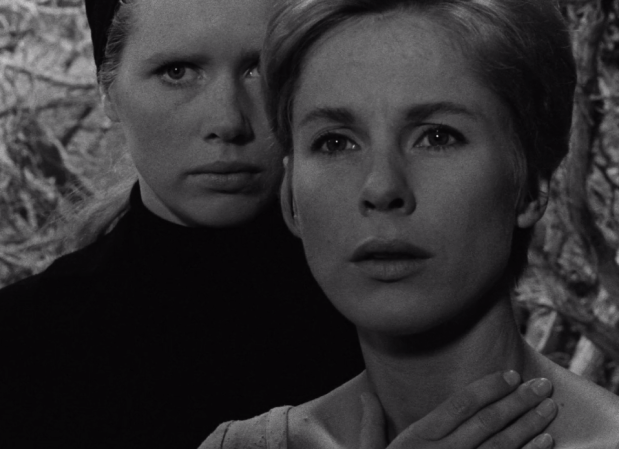
Still sticks with me. One of the greatest movies ever made. I also can’t imagine enduring it again right now, for what that’s worth. Whew.
3Stalker

This one’s grown on me. I loved it, obviously, but I like it even more when I think about it offhandedly. I really recommend this one but I also get that it may not be for everyone.
4In the Mood for Love

The sequel is much, much lower on this list.
5Dune

One of the only new movies I saw this year, somehow. Excellent, though it really will depend ultimately on how part two works out.
6Weathering With You

I need to watch this again. It’s forever tied to Your Name, one of the single most successful animated movies of all time, and I think that comparison puts it in weird space. I watched Your Name again this year and it’s certainly a better movie, and an all-time film, but I love the charm of this one.
7Nomadland

Still agree this was the right call for Best Picture and it’s rare that the feeling persists through the year.
8Starship Troopers

Almost hard to watch this during the Trump years and what’s come after, but worth the experience. Do you want to know more?
9Mystery Train

I want to watch more Jim Jarmusch films in 2022. What’s your favorite?
10Another Round

It’s rare that you just know you’ll never watch a movie again and still love it. The experience of this one is too trying to revisit it, but one time through I think it’s really worth anyone’s time.
11Le Samourai

I recommended this one to a few people and I watched it twice this year, which is not common for me. Maybe the most approachable movie on this list, which feels weird to say but may be true.
12The Father

Will forever be remembered for the dumb Oscars ceremony this year, but should be remembered for a haunting performance by Anthony Hopkins.
13Solaris (1972)

I prefer Stalker, by the same director with similar themes, but the ending here will knock you out.
14Bloody Nose, Empty Pockets

I never hear anyone talking about this one, but the experience of being in a weird bar with weird people, especially as we spend time at home and lose this sort of strange experience, feels very novel now.
15Dick Johnson is Dead

I don’t agree with some of the approach of this movie but I love what they made. You don’t have to 100% love everything about a movie to respect it and to marvel at it.
16Sound of Metal

I read Drew Magary’s book about having a traumatic brain injury this month and it made me appreciate this movie even more. Highly recommend both.
17No Sudden Move

I watched this again on a whim. Loved it even more the second time. There’s not really all that much to it, it’s just a great watch. Matt Damon’s performance here deserves more love, too.
18Uncut Gems

I could never watch this again, but what an experience to do once.
19Johnny Guitar

I do love Sterling Hayden, but this is already fading from my memory. That first 30 minutes is great, though.
20First Cow

Feels even more slight now than it did when I finished it. The perfect example of a fine film but not one that’s going to set anyone on fire. I think that’s fine, though, right?
21Opening Night

I watched several interviews about the ending to this one. I really recommend it just to see where it goes.
22Minari

I’m really glad Youn Yuh-jung won the Oscar for this one. It would have been a tough year for it to win anything beyond that, but that’s still something.
23Bande à part

I don’t even know if I recommend this one, but this feels like the right spot on the list. This isn’t the actual middle, but there’s a big difference above and below this line.
24Borat Subsequent Moviefilm

I stand by my review of this as a film. There’s much more going on here than in the first one. It feels crazy to say that, but I really believe it.
25Promising Young Woman

I don’t think I nailed this review. This is a daring movie about a daring subject and it’s really fantastic. I think as a man in America, this one’s important not just to see, but to consider deeply. The surface is obvious, but there’s even more than that.
26Vivre sa Vie

I love the parts I love, and this one’s a classic, but the chunk towards the end is emblematic of how people feel when you say “well, it’s a French classic, and…”
27Judas and the Black Messiah

This is a great example of asking you to go deeper on what you think you know about a real story. The performances are great, but I especially love LaKeith Stanfield. I think this is his best role other than Sorry to Bother You, which is a masterpiece.
28Snowpiercer

I’d never seen it and watched it on a whim. Even better than I expected. Tilda Swinton is something else.
29The Death of Stalin

I loved it, but not as much as In the Loop. I think In the Loop is one of the five best comedies ever made. This one’s much darker and almost as funny, but I couldn’t help comparing the two.
30The Seventh Seal

A classic for a reason. Better than you’d expect, especially if you’re worried it’ll feel detached and snooty.
31RoboCop

Another one I’d somehow never seen all the way through. I watched this because of how much I loved Starship Troopers. This feels equally relevant now, which is not a new take on my part, but it isn’t quite as interesting to me personally.
32Once Upon a Time in the West

A classic western with some classic performances, but it drags a lot and it’s hard to not view the problems with it through a modern lens. This is too low objectively, but it’s the right spot for me personally.
33Master and Commander: The Far Side of the World

This is probably controversial and it’s not intended as a slight, I just had my expectations set wrong for this one. It’s a pretty perfect piece of filmmaking and it deserves the reputation it has. Some element of every person’s rankings is personal preference and I’d still say everyone, regardless of who they are, should see this.
34After Hours

Uncut Gems for another generation. Exhausting, but intentionally. Makes me tired just to think of it.
35Blowup

I do not like Blowup as much as other people. I’m fine with that.
36PlayTime

I think the first segment of PlayTime is a true marvel. It’s pretty shaggy, though, and it makes the same point over and over. I get why it’s a masterpiece, but watching it now the enjoyment graph goes in the wrong direction: I loved it, then I thought it was fine, then I liked it.
37Licorice Pizza

The newest film on this list. I think there’s a lot to like here, but I never really got over the central conceit. It’s going to be interesting to rewatch this and to see what people think when it goes into wider release.
38Across the Pacific

A racist movie from a racist period. Some pretty good Bogart stuff. You can probably skip it.
39The Trial of the Chicago 7

Sorkin at his most Sorkin.
40Minnie and Moskowitz

Someday I picture myself being cornered in a conversation by someone explaining to me why the love story in this one is actually magical. I’d welcome that conversation, sorta, because I love little pieces of this one but I really just do not like the love story. I get it that problem is part of what you’re supposed to want, but no thanks.
41Mank

I said all I’ve got to say in my review, but the core is that this is not the story of Citizen Kane, even if it’s pretty interesting to watch one man fall apart.
42Bringing Up Baby

One of the 100 greatest movies ever made on almost every list, but just doesn’t hit me right. I need to see it again and will, eventually.
43Wonder Woman 1984

I also watched the first one again this year and loved it, again. I just don’t think the sequel works, largely for the reasons everyone else does.
442046

The sci-fi pieces of this one are unwatchable, both boring and off-putting. I really, really love the other segments, but the thing doesn’t stich together for me.
45 Un chien andalou

I don’t even know where to put this. It’s central to film history but it’s also exactly what it is. It feels like a cheat to put it anywhere. It’s either the best or worst movie ever, I guess, though I do think you should watch it if you haven’t.
46The United States vs. Billie Holiday

The central performance is excellent, but that’s it. The story is a mess and it’s not very interesting to watch. The reviews were negative. It’s just not a very good movie, as simple as that.
47I’m Thinking of Ending Things

I am more interested in this movie than almost anything down here at the bottom of the list. Jesse Plemons was on WTF with Marc Maron recently and admitted that the whole cast had to ask, during filming, what the movie was about. All of them, not just a few, had no idea what the purpose of what they were making was or what to make of the ideas. I really do not like the final product, but how interesting is that? There’s a lot in here that is worth getting out of it, which is why it’s usually better to make a weird failure than it is to make a boring success, but I really just get a sour taste in my mouth when I think about it.
48Titane

This is going to win a million more awards this year and maybe it should. It’s not terrible, but I really feel like there is an Emperor’s New Clothes element to this. It is possible to not like something strange for reasons beyond not getting it.
49The Nowhere Inn

I love everyone involved here, but this would work better as a short than it does as a movie.
50Solaris (2002)

The remake robs the original of everything that makes it worth seeing. Not even worth watching this, even if you love or hate the original.
51Last Year at Marienbad

The ultimate Emperor’s New Clothes movie, to borrow the line from above. Some reviewers seem to think anyone who loves this is kidding and I can see that. It’s possible to read even the positive reviews as negative, given the way they have to talk about the sparseness and ambiguity. It’s an interesting movie, but I hated it.
52RahXephon: Pluralitas Concentio

I watched all of the anime RahXephon this year because people compare it to other things I like. It is terrible and the movie connected to it is even worse. It is barely possible to parse this as a story. I would not recommend this to anyone, for any reason.
53Hillbilly Elegy

The worst movie I saw this year and worse than anything I can remember in recent years. A strong contender for the worst film I’ve ever seen. A dark, terrible message delivered poorly. It is a negative force in the world that this exists, which makes it worse than movies that are constructed more poorly. Meandering, internally conflicting, and intentionally dishonest, with a brutal, cruel ending. I would recommend you watch any other movie, no matter what, twice, instead of this once.

In 2022 we’ll be doing some different stuff around here, likely some larger discussions of film with fewer Best Movie reviews. We’ll watch the Oscar nominees when they come around, as we always do. We may try some new stuff, too.

Hope to see you in the new year!

Worst Best Picture: Is Spotlight Better or Worse Than Crash?

Spotlight

image source: npr

Alex Russell

In “Worst Best Picture” we search every single Best Picture Oscar winner of all time from 1927 to present to uncover the worst of them all. Conventional wisdom says that 2005’s winner Crash is the worst winner in history. We won’t stop until we’ve tested every last one. Read the the first, our review of Crash, here. Posts will be relatively spoiler free, but there may be some details revealed. Today’s installment is the 2015 winner Spotlight. Is it better than Crash?

Doing this feature yearly now has changed the way I think about Best Picture winners. I watched the first 86 over the course of a year and tried to consider the necessary context of each film’s release before judging it. Wings, the first winner, is a silent film that feels intolerably long at times and fascinatingly specific at others. Judged against modern film with no perspective, it doesn’t fare very well. It’s only with the context of the day that you begin to understand why the pathos of some scenes worked for those audiences.

This is the second year that I’ve not only watched the movie as it came out, but I also saw the Oscars themselves and all of the other nominees when they were new. That removes the struggle of context because the context is “right now.” We all know this world and we don’t have to use any caveats when describing a movie’s merits or failures now. They just are what they are.

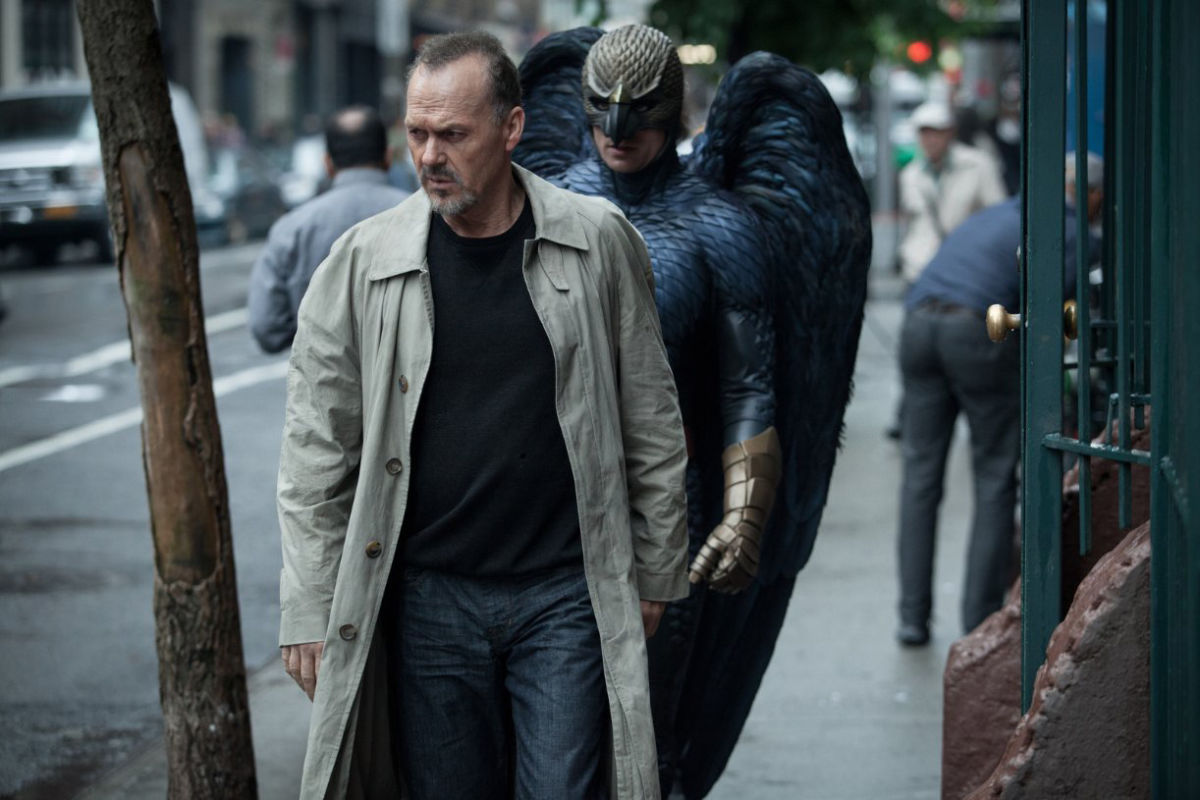
Last year I wrote about how history would judge Birdman (still not using that whole title) and it’s honestly tough to say. Alejandro Iñárritu won his second consecutive Best Director award for The Revenant and seems to have solidified “divisive” as a term that needs to be used when talking about him. Personally, I still think Birdman is outstanding but I think The Revenant was the worst movie up for Best Picture or Best Director this year. I think I know how people felt last year now. Sorry y’all had to go through that, now that I’m in your camp.

Mumbling, screaming, bear-fighting movie aside, this was a strong year for Best Picture nominees. You have your necessary “slight” movies about good people doing (mostly) good things in Bridge of Spies and Brooklyn, you have your surprise nominations for movies for people who don’t necessarily watch the Oscars in Mad Max: Fury Road and The Martian, and you have your capital-I Important movies in RoomThe Big Short, and Spotlight. There really aren’t a lot of bad choices there. History will correctly remember these Oscars as the ones mired in exclusionary selections, but at the very least the exclusionary movies they picked were all good ones.

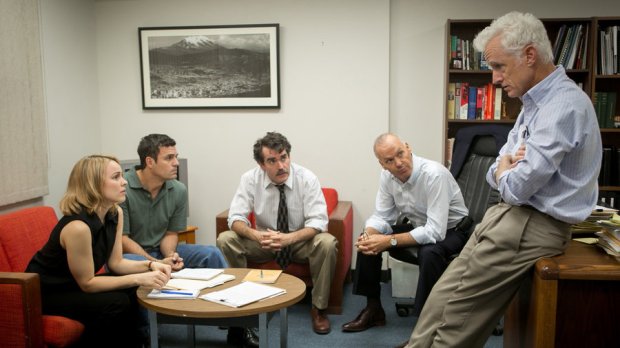
Spotlight seemed inevitable in the weeks leading up to the ceremony. When a movie is nearly universally acclaimed, I always like to go to the reviews that demand that “nearly” adverb. There are 11 negative reviews on Rotten Tomatoes and the common thread seems to be that the acting isn’t up to par. Spotlight wasn’t nominated for either lead acting category and Rachel McAdams and Mark Ruffalo lost in both supporting categories, but the film demands the nebulous “ensemble cast” descriptor. No one performance dominates the film (though if I had to pick one, I’d go with Ruffalo) because it’s about the story they’re all telling. They don’t matter; the truth does. That could be a sentence used to describe a very sanctimonious movie, but in this case I mean it in a positive way.

Spotlight doesn’t need a lot of description. A group of reporters gather accounts of sexual abuse by priests of children in Boston. It’s a true story, so it’s no spoiler to say that they publish the truth and the city (and country, and world) is outraged. We’re still in this. We still know this and we often feel confused or powerless to help in situations like these. There isn’t an easy answer here and the movie isn’t designed to offer one. It’s the first step — the spotlight, get it — in highlighting a problem. That scope works for this narrative and I think that’s why it’s such a success. They set out to tell one specific part of an important, true, huge story and they nailed it.

Let’s close this year on one more discussion of context. I’ve heard a lot of discussion about how recent winners will be remembered, and indeed that was the main detracting argument about Birdman. I don’t know if people in the future will understand Spotlight and our context. It’s strange to watch a movie like Gentleman’s Agreement or The Life of Emile Zola now because they require you to step outside of yourself and your world. Spotlight isn’t timeless, but I don’t know that it needs to be in order to be great. Great film needs to make sense in the now, first, and Spotlight definitely does that.

The Best Part: Mark Ruffalo loses his mind towards the end of the movie because he’s frustrated about the progress of their story. He wants to do more and he wants to find the answer for how you “fix” the whole situation. There isn’t one. Everyone on the Spotlight team serves as an audience surrogate at some point or another in Spotlight, but no one nails the emotions the movie instills as much as he does in that moment. It’s an outstanding choice to contain the “anger” of the team to that moment, as well. They’re always driven, but that’s the only time it all overflows and becomes unproductive anger. How many of us would only be capable of unproductive anger in that real-life job?

The Worst Part: This is tough for Spotlight. While I don’t think it’s a perfect film, I don’t think there’s any one thing I didn’t like or would change. I think Room should have won Best Picture, so I’m tempted to go with “not enough time trapped in a room that inflicts psychological and biological terror.” In all seriousness, if I have to pick something I suppose it doesn’t really complicate the newsroom staff very much. Most of the heroes are solely heroes whose greatest faults include drinking beer after work and not sleeping enough. I don’t even know that making them complex figures would make this a better movie, but it’s something I noticed.

Is It Better or Worse than Crash? The difference here is an ocean. Spotlight is several magnitudes better than Crash. One interesting comparison here is the ensemble cast idea. Both movies lack a true “lead” but they play this different ways. Crash is all about how people enter and leave each other’s lives while Spotlight is about working as a team. Both kinds of ideas can work with an ensemble cast, but you’re only as strong as your weakest player. Spotlight doesn’t have a bad performance. Crash probably has a good one, somewhere, but after 88 of these I’m fairly convinced that it does not have a good anything.

Worst Best Picture Archives: Crash | Terms of Endearment | Forrest Gump | All About Eve | The Apartment | No Country for Old Men | Gentleman’s Agreement | 12 Years a SlaveThe Last Emperor | The Silence of the Lambs | The Artist | A Man for All Seasons | Platoon | The Lord of the Rings: The Return of the King | The King’s Speech | Rain Man | The Departed | The Bridge on the River Kwai | Marty | Gigi | It Happened One Night | Driving Miss Daisy | Shakespeare in Love | Wings | Midnight Cowboy | Rocky | Gone with the Wind | Chicago | Gladiator | Cavalcade | The Greatest Show on Earth | You Can’t Take It With You | The Best Years of Our Lives | The GodfatherCasablancaGrand Hotel | Kramer vs. Kramer | The French Connection | In the Heat of the Night | An American in Paris | Patton | Mrs. Miniver | Amadeus | Crash, Revisited | How Green Was My Valley | American Beauty | West Side Story | The Sting | Tom Jones | Dances with Wolves | Going My Way | The Hurt Locker | The Life of Emile Zola | Slumdog Millionaire | The Deer Hunter | Around the World in 80 Days  | Chariots of Fire | Mutiny on the Bounty | Argo | From Here to Eternity | Ordinary People | The Lost Weekend | All the King’s Men | Rebecca | A Beautiful Mind | Titanic | The Broadway Melody | The Sound of Music | On the Waterfront | Unforgiven | Million Dollar Baby | My Fair Lady | HamletBraveheart | Oliver! | The English Patient | Lawrence of Arabia | Cimarron | One Flew Over the Cuckoo’s Nest | All Quiet on the Western Front | The Great Ziegfeld | Out of AfricaSchindler’s ListGandhi | Ben-HurThe Godfather Part II | Annie Hall | Birdman or (The Unexpected Virtue of Ignorance) | Spotlight

Alex Russell lives in Chicago and is set in his ways. Disagree with him about anything at readingatrecess@gmail.com or on Twitter at @alexbad.

Best Picture vs. Best Director: Is The Life of Emile Zola Better than The Awful Truth? (1937)

The Awful Truth

Alex Russell

In 2014 I watched every single Best Picture Oscar winner in an attempt to find the absolute worst of them. I found it: Crash. Most movies that win Best Picture also win Best Director. In fact, from 1927 to 2014 only 24 movies won the Oscar for Best Director without also winning the Oscar for Best Picture. Did any of those 24 deserve both awards? This is Best Picture vs. Best Director, in which we examine the few films to not win both awards and try to determine why the honors were split those years. Today’s movies are The Life of Emile Zola (Best Picture) and The Awful Truth (Best Director), the winners from 1937. Which is the better film?

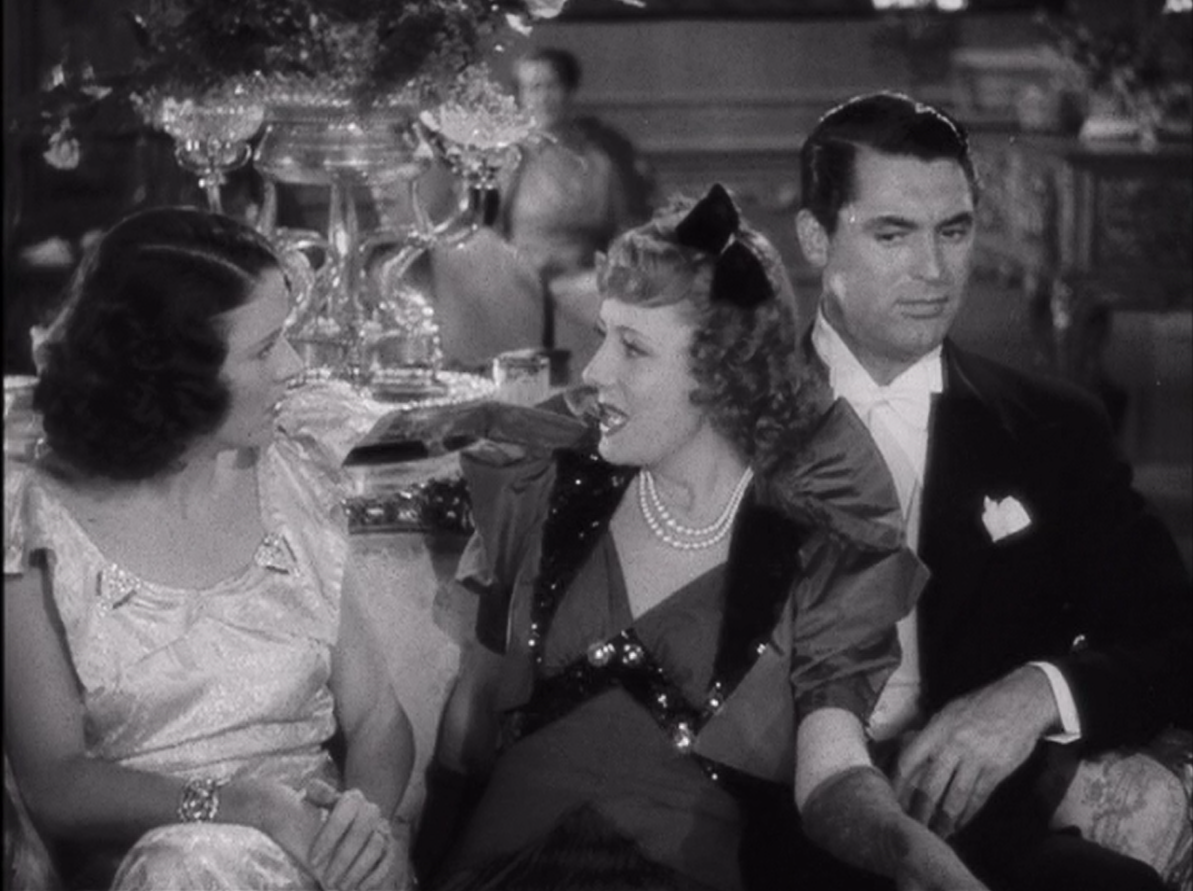
The Best Director film: The Awful Truth, an intensely silly screwball comedy full of divorce and remarriage goofs. Irene Dunne and Cary Grant can’t stand each other anymore and go to absurd lengths to avoid talking about their failing marriage. When Grant’s character is caught in a lie about going to Florida (he got a fake tan and sent fake letters home to mask his true whereabouts) the couple is unable to continue their lies. After an extremely silly scene where Dunne pretends to be Grant’s drunk sister and what passed for an exciting car chase in 1937, the characters run out of ways to distract each other and must confront the difficult truth of a marriage that may or may not be what they both really want.

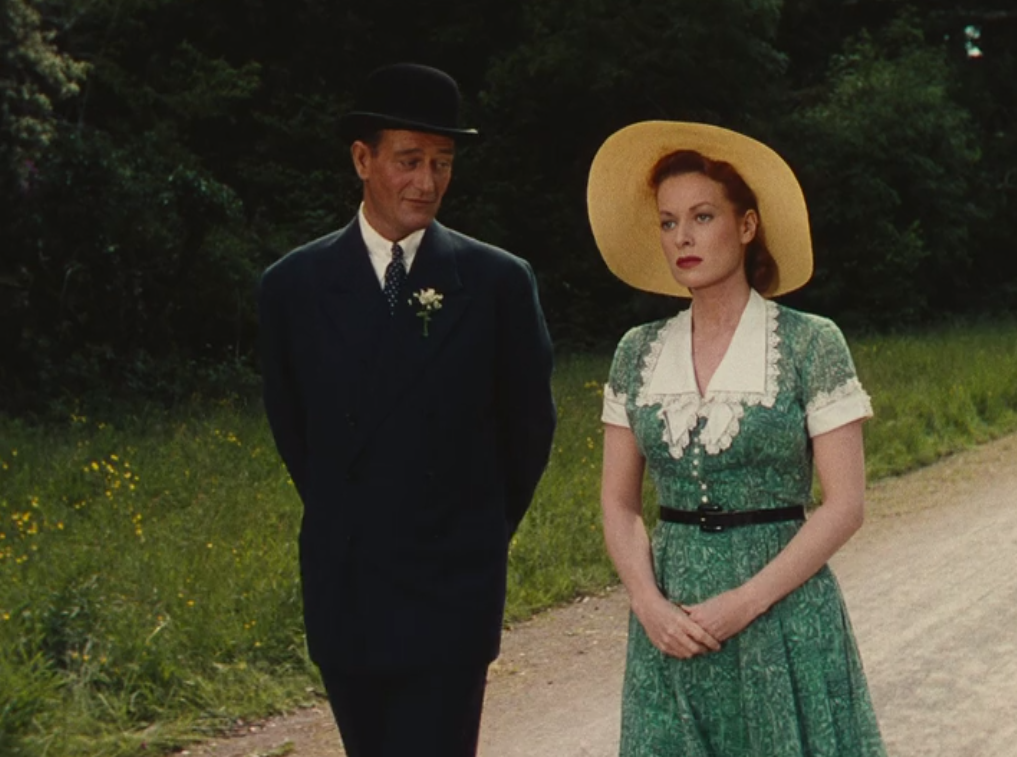
The Best Director director: Leo McCarey, who won another Best Director award in 1944 for Going My Way. That movie also won Best Picture, but it’s a fairly sentimental musical vehicle for Bing Crosby and arguably not as good as The Awful Truth. Both movies reveal a very positive director who wanted to highlight the goodness in the world. That makes McCarey very different than his peers at the time and an odd Oscar winner in general. The Academy rarely rewards a light touch.

The Best Picture film: The Life of Emile Zola (read the Worst Best Picture entry here), which I ranked #61 on my list of every Best Picture winner. It’s one of the only movies on the list I watched twice, though that was mostly because I found it impenetrable the first time. The movie tells the story of Emile Zola’s response to anti-Jewish sentiment in his time, but in 1937 the director was afraid to use the word “Jew” even once. As a result it’s left up to the audience to understand what’s being talked about. Some of the storytelling works (a character is given a gun and frankly told to shoot himself to avoid an ugly trial) and some doesn’t (the first 20 minutes is spent defining Zola as a freedom fighter, but he mostly comes off as annoying and self-aggrandizing) and the movie feels uneven at best. It’s brave for 1937, but it doesn’t hold up well.

The Best Picture director: William Dieterle, who was never nominated again and was eventually a casualty of the McCarthy era. His career was defined by bio-pics and the only one to really be rewarded critically was Zola.

Did the right movie win Best Picture? Likely, based on the standards of what “Best Picture” has come to mean. The Awful Truth is more watchable in modern standards, but in the historical frame of 1937 it’s just a pretty good version of a standard film. Screwball comedies were common and even though The Awful Truth has some memorable moments it doesn’t take any risks. The Life of Emile Zola is a more deserving Oscar winner. For its time, it shows a lot of daring as a film and displays a man who risks his status for a cause he believes in. It’s the uncommon case of a less watchable story but a more impressive accomplishment in film-making.

Just for the hell of it, are either of them worse than CrashBoth of these movies feature characters undergoing enormous challenge and triumphing, though at the cost of something dear to them. Cary Grant is embarrassed time and again in The Awful Truth and (much more dramatically) Paul Muni’s Zola risks everything to defend a man unjustly accused. For as dramatic a tone as Crash insists upon, the stakes are never that high. No one risks learning or losing anything. They all just grow increasingly disgusted with their world until the story reaches a bow-tie ending.

Best Picture vs. Best Director Archives: The Greatest Show on Earth vs. The Quiet Man (1952) | Wings vs. Seventh Heaven (1931-1932)Hamlet vs. The Treasure of the Sierra Madre (1948)An American in Paris vs. A Place in the Sun (1951)The Life of Emile Zola vs. The Awful Truth (1937)

Alex Russell lives in Chicago and is set in his ways. Disagree with him about anything at readingatrecess@gmail.com or on Twitter at @alexbad.

Best Picture vs. Best Director: Is An American in Paris Better than A Place in the Sun? (1951)

A Place in the Sun

Alex Russell

In 2014 I watched every single Best Picture Oscar winner in an attempt to find the absolute worst of them. I found it: Crash. Most movies that win Best Picture also win Best Director. In fact, from 1927 to 2014 only 24 movies won the Oscar for Best Director without also winning the Oscar for Best Picture. Did any of those 24 deserve both awards? This is Best Picture vs. Best Director, in which we examine the few films to not win both awards and try to determine why the honors were split those years. Today’s movies are An American in Paris (Best Picture) and A Place in the Sun (Best Director), the winners from 1951. Which is the better film?

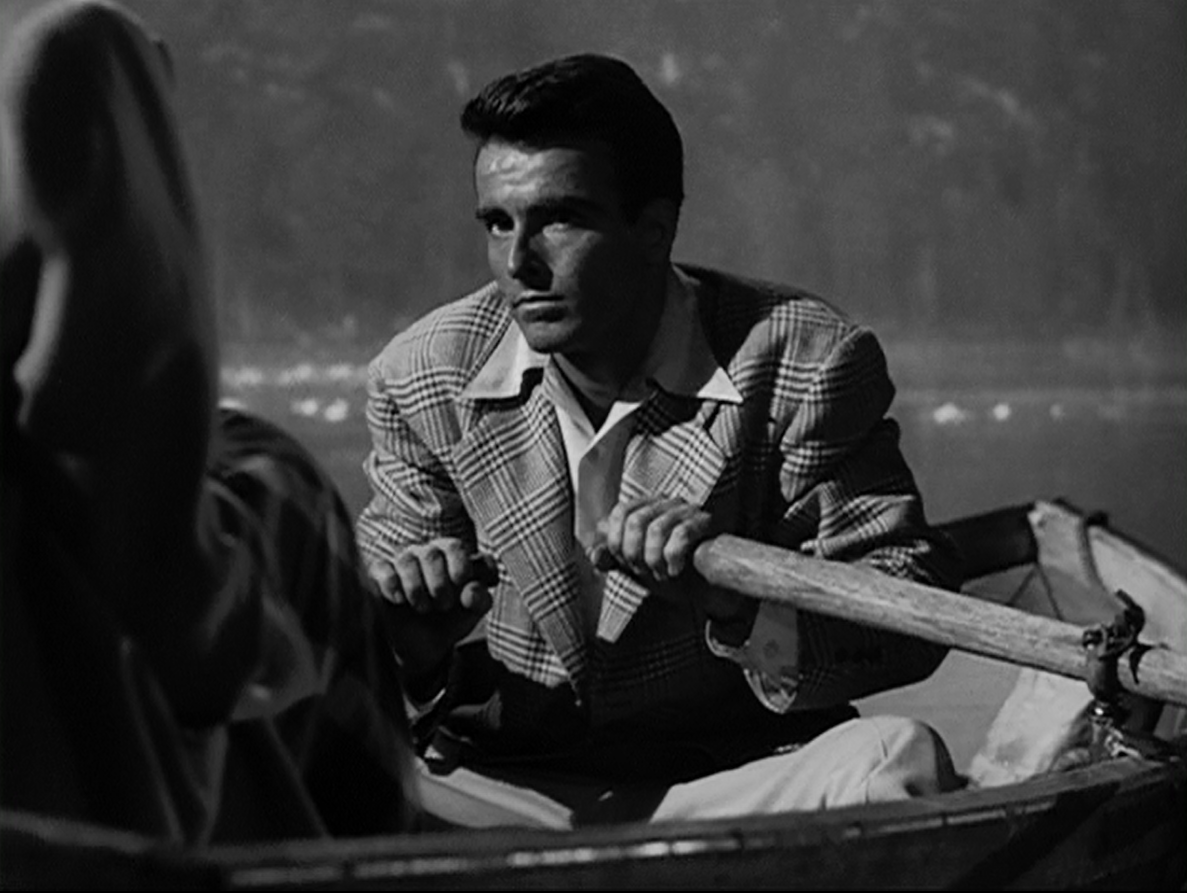
The Best Director film: A Place in the Sun, which is a retelling of the Theodore Dreiser novel An American Tragedy. Montgomery Clift (who plays the pacifist lead in From Here to Eternity) starts out as a humble worker in his uncle’s factory but reveals himself to be a “climber” over the course of the story. He starts dating one of his peers (Shelley Winters, who is beautiful but like many supporting women of the era is treated as lesser even though her sole negative quality seems to be that she’s not Elizabeth Taylor) and his life is working out well. His downfall begins as he gains some success at work and gets invited to events where he meets a more beautiful, high-society woman (Elizabeth Taylor, who is Elizabeth Taylor) and falls in love. Clift’s character George decides that he has to be rid of his lesser girlfriend so he can marry Elizabeth Taylor. He begins to act shifty and you’d expect his girlfriend to notice, but she still follows him out to a secluded lake for a romantic getaway. Things take an unexpected turn (or two, or three), but the dark heart of man is a powerful thing.

The Best Director director: George Stevens, who won a second Best Director Oscar in 1956 for Giant. The two movies couldn’t be more different. It makes you really consider the concept of “style” for a director, since Giant is a massive undertaking that looks at the long life of one person and A Place in the Sun is a much quieter look at a man’s soul.

The Best Picture film: An American in Paris (read the Worst Best Picture entry here), which I ranked 67th on my list of every Best Picture winner. It’s a silly musical about an American’s romances and art career (kinda) while he’s in Paris. Gene Kelly is a star in it, but the whole thing doesn’t really hold up. Your experience may vary if you can appreciate the 16-minute ballet that closes the film. I cannot.

The Best Picture director: Vincente Minnelli. Liza Minnelli’s father directed two musicals that won Best Picture: Gigi and An American in Paris. They’re both classics (though some critics consider Gigi as a disaster in retrospect), but they may not be for everyone. I found Gigi somewhat charming and more interesting than An American in Paris. They’re both okay.

Did the right movie win Best Picture? No, but I don’t think the right movie from 1951 is either of these. History remembers both of these movies as classics, but 1951 was the year Brando played Stanley Kowalski in A Streetcar Named Desire. It didn’t win for Best Picture or Best Director, but even stranger it took home three of the acting awards but not Best Actor. Vivien Leigh, Karl Malden, and Kim Hunter are all superb, but it’s bizarre to see how close the Oscars came to the sweep and that the denial came because Brando didn’t win for one of the greatest roles in history. Of these two, A Place in the Sun is the stronger film. That makes all these awards even stranger, in retrospect.

Just for the hell of it, are either of them worse than CrashOh, no. An American in Paris isn’t for me, but it’s mostly harmless. Critics consider a lot of the character elements in A Place in the Sun differently now than they did in 1951, and while the movie deserves rethinking to a degree it’s still a great watch. Depending on your perception, Clift’s character either slowly reveals his true self or he degrades over time. Either viewing strikes me as correct and I think the dour ending really sells who Clift either always was or has become. There’s lots to consider in whichever view you take.

Best Picture vs. Best Director Archives: The Greatest Show on Earth vs. The Quiet Man (1952) | Wings vs. Seventh Heaven (1931-1932)Hamlet vs. The Treasure of the Sierra Madre (1948)An American in Paris vs. A Place in the Sun (1951) |

Alex Russell lives in Chicago and is set in his ways. Disagree with him about anything at readingatrecess@gmail.com or on Twitter at @alexbad.

Best Picture vs. Best Director: Is Hamlet Better than The Treasure of the Sierra Madre? (1948)

The Treasure of the Sierra Madre

Alex Russell

In 2014 I watched every single Best Picture Oscar winner in an attempt to find the absolute worst of them. I found it: Crash. Most movies that win Best Picture also win Best Director. In fact, from 1927 to 2014 only 24 movies won the Oscar for Best Director without also winning the Oscar for Best Picture. Did any of those 24 deserve both awards? This is Best Picture vs. Best Director, in which we examine the few films to not win both awards and try to determine why the honors were split those years. Today’s movies are Hamlet (Best Picture) and The Treasure of the Sierra Madre (Best Director), the winners from 1948. Which is the better film?

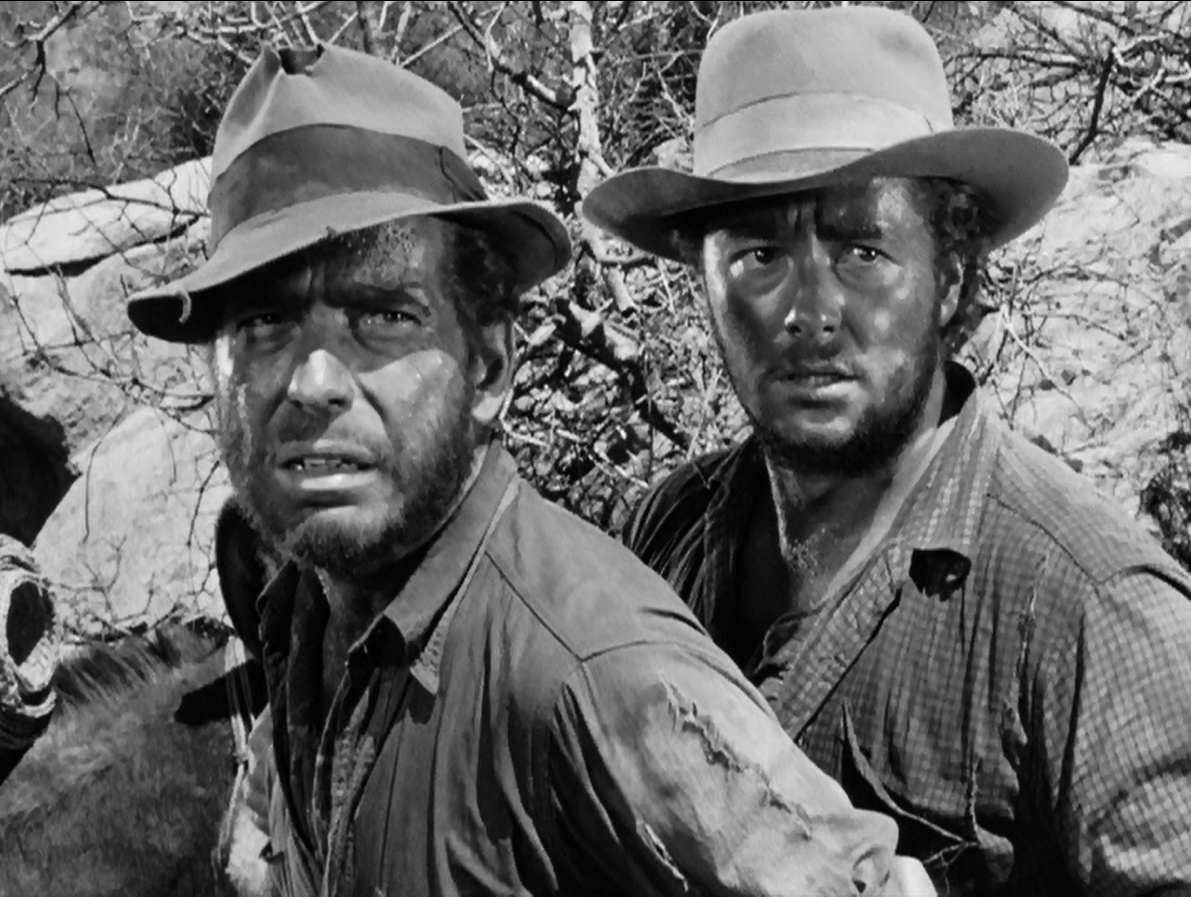
The Best Director film: The Treasure of the Sierra Madre, which everyone knows at least for the “stinking badges” line (which isn’t actually exactly that, but you probably know that, too). It’s so much more than a memorable line. One of the best films on either of these lists, Sierra Madre is a serious look at men who feel the world owes them more than what they’ve got. Fred C. Dobbs (Humphrey Bogart) teams up with two other men (Tim Holt and Walter Huston, the director’s father) to search for gold in the mountains of Mexico. They luck out after relatively few setbacks and are rewarded with small personal fortunes. It’s enough to split three ways, but that logic only holds up until it’s dark out and you’re alone with your thoughts. Do you really have to split it? Don’t you deserve it all? How well do you really know these other guys, anyway?

The Best Director director: John Huston, who was nominated for the award four more times. The Treasure of the Sierra Madre was his only win. Like seemingly every other great director on the list, he was married a number of times (five) and has famous offspring (Anjelica Huston). His name may not be one you immediately know like some others on this list, but he fits right in with the other drinking, smoking madmen who made great art in the 40s and 50s.

The Best Picture film: Hamlet (read the Worst Best Picture entry here), which I ranked 81st on my list of every Best Picture winner. I was pretty brutal to Laurence Olivier’s Hamlet in my first viewing, largely because I disagreed with the choice to play up Hamlet’s sexual feelings towards his mother. It might benefit from a rewatch, but I can’t imagine sitting through three more hours of those two actors inches from each other’s faces.

The Best Picture director: Laurence Olivier, who directed only a handful of movies despite being one of the greatest actors of all time. I recently watched the insane The Boys from Brazil and he nearly saved even that disaster. He was marvelous in Hitchcock’s Best Picture winner Rebecca. He was an iconic Shakespearean actor, but he seemed to only want to direct a few works. I haven’t seen his Henry V or Richard III, so as a director I can only judge his Hamlet. I judge it harshly, but more for the directing choices than for his performance, which is exactly what you’d expect from an actor of his stature.

Did the right movie win Best Picture? No, though I’m harder on Hamlet than the average viewer. I don’t like the interpretation of the play and that distorts my ability to judge any other part of the film, but it’s a lesser piece of art than Huston’s adaptation. I haven’t read the original The Treasure of the Sierra Madre, but I have to imagine it’s closer to the film than Hamlet. There are comparisons to be made beyond that, but the most important thing to comment on here is how impressive Bogart is. He’s one of the greats for a reason, and he plays Dobbs with such darkness right from the start that it fills the viewer with unease. His portrayal sells the message of the whole picture, and I think that, on top of so much else, deserves the nod.

Just for the hell of it, are either of them worse than CrashNope. Hamlet is harder to sit through and it’s certainly less interesting, but the “interest” when you’re talking about Crash is morbid curiosity. I still think about that scene in Crash where a guy almost kills a kid in the street in broad daylight and then no one does anything about it. I think about that scene a lot.

Best Picture vs. Best Director Archives: The Greatest Show on Earth vs. The Quiet Man (1952)Wings vs. Seventh Heaven (1931-1932)Hamlet vs. The Treasure of the Sierra Madre (1948) |

Alex Russell lives in Chicago and is set in his ways. Disagree with him about anything at readingatrecess@gmail.com or on Twitter at @alexbad.

Best Picture vs. Best Director: Is Wings Better than Seventh Heaven? (1927-1928)

Seventh Heaven

Alex Russell

In 2014 I watched every single Best Picture Oscar winner in an attempt to find the absolute worst of them. I found it: Crash. Most movies that win Best Picture also win Best Director. In fact, from 1927 to 2014 only 24 movies won the Oscar for Best Director without also winning the Oscar for Best Picture. Did any of those 24 deserve both awards? This is Best Picture vs. Best Director, in which we examine the few films to not win both awards and try to determine why the honors were split those years. Today’s movies are Wings (Best Picture) and Seventh Heaven (Best Director), the winners from 1927-1928. Which is the better film?

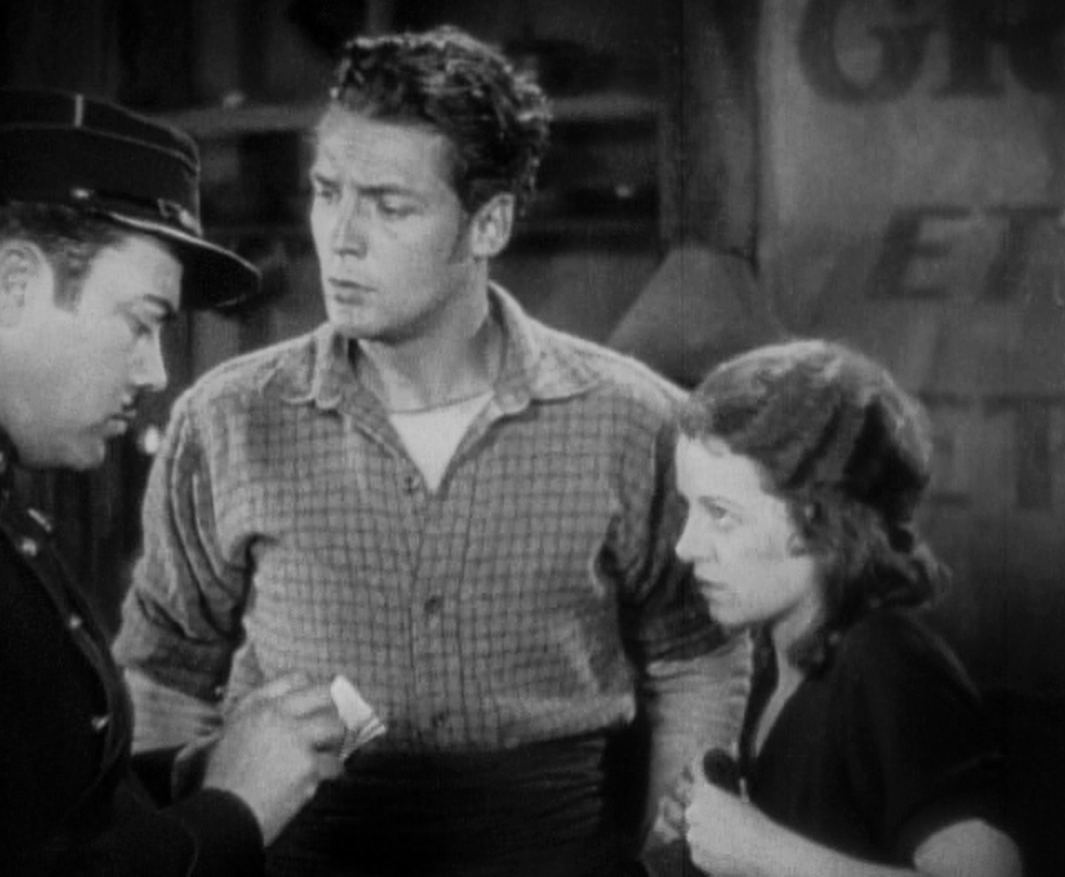
The Best Director film: Seventh Heaven, a story about love and war. You can apply that sentence to almost every movie in the 20s and 30s, but there are few you can entirely describe with it. Seventh Heaven is about absolutely nothing else. Diane (Janet Gaynor, who won the first Best Actress award for the role) is a poor street girl in pre-war France. Diane’s ticket out of poverty is her rich family, but when they return and ask her and her sister Nana (Gladys Brockwell) if they have been good, Diane must be honest and say that they have not. Her family leaves immediately and Nana whips Diane (literally whips her, with an actual whip, for real) in the French streets. It’s all designed to start the Diane character as low as possible, but since it happens in about three minutes the result is very jarring and upsetting, and not in the way it’s intended. Diane is rescued by Chico (Charles Farrell) and they slowly fall in love after merely pretending to be married to avoid the police. Then Chico goes to war. Can love triumph in wartime? Will Diane be safe from her murderous sister? Did families really abandon each other after exchanging two sentences in the 20s? You’ll have to watch to find out!

Two Arabian Knights also won for Best Director (Comedy Picture) in 1927-1928, but it’s out of print as far as I can tell. This is also the only year they awarded two Best Director awards, and the dramatic version feels like the correct predecessor to today’s Best Director award.

The Best Director director: Frank Borzage, who won two Best Director Oscars in his life. After the inaugural Seventh Heaven, he won in 1931-1932 for Bad Girl. I really want to save my thoughts about Bad Girl for that post, but it’s enough to say that this one is significantly less bizarre through modern eyes. Borzage was one of 14 children and one of only eight to survive childhood. That certainly explains the bleakness in both movies.

The Best Picture film: Wings (read the Worst Best Picture entry here), which I ranked 63rd on my list of all the Best Picture winnersWings is mostly a historical footnote as the only silent film to win Best Picture. It plods along by modern standards, but it’s a little more watchable than most of the other first 10 winners. There’s a compelling love story in it and the combat is exciting. Unexpected characters die and it lacks some of the predictable nature of many early films. I can’t honestly recommend it unless you want to watch “the first Best Picture winner” for exactly that reason, but there are very watchable chunks throughout and you could do much worse.

The Best Picture director: William A. Wellman, who flew in World War I and seems to have hated actors even more than the average director in his era. He worked for three decades after Wings, but you’re unlikely to recognize much in his filmography. There are worse things to be known for than directing the first Best Picture, though.

Did the right movie win Best Picture? Yes, though it may depend on what you want from a movie. Wings is a technical marvel, and though it looks dated to modern eyes it still seems impressive given the era. There’s something in Wings for a modern audience, then, and that just isn’t true in Seventh Heaven. Chico and Diane are non-characters who don’t establish personalities very well. Chico brags that he’s remarkable, but he does so by saying things like “I am a most remarkable man!” While every movie has to be judged through the lens of time, that feels pretty lazy even for 1931. You may find Seventh Heaven sweet, but by the conclusion it’s full-on soap opera and it’s way too much.

Just for the hell of it, are either of them worse than CrashNo, but they’re both much less watchable. Both Seventh Heaven and Wings drag a lot and you’re likely to find them boring if you watch them today. That said, it’s not a good sign when the movie with a murderous, mindless alcoholic with a whip doesn’t have the least sympathetic character in it. The contemptuousness of Crash drags it beneath even other dark stories about the heart of mankind.

Best Picture vs. Best Director Archives: The Greatest Show on Earth vs. The Quiet Man (1952)Wings vs. Seventh Heaven (1931-1932) |

Alex Russell lives in Chicago and is set in his ways. Disagree with him about anything at readingatrecess@gmail.com or on Twitter at @alexbad.

Best Picture vs. Best Director: Is The Greatest Show on Earth Better than The Quiet Man? (1952)

The Quiet Man

Alex Russell

In 2014 I watched every single Best Picture Oscar winner in an attempt to find the absolute worst of them. I found it: Crash. Most movies that win Best Picture also win Best Director. In fact, from 1927 to 2014 only 24 movies won the Oscar for Best Director without also winning the Oscar for Best Picture. Did any of those 24 deserve both awards? This is Best Picture vs. Best Director, in which we examine the few films to not win both awards and try to determine why the honors were split those years. Today’s movies are The Greatest Show on Earth (Best Picture) and The Quiet Man (Best Director), the winners from 1952. Which is the better film?

The Best Director film: The Quiet Man, the story of Sean Thornton (John Wayne) and his move to Ireland to recover his family’s land. Thornton is a boxer from Pittsburgh, and even as a fish out of water story it’s still really damn strange. John Wayne is John Wayne all the time. He’s a hard-drinkin’, no backtalkin’, absolutely-no-bullshit American who rides a horse everywhere and punches men who are rude to women. He buys the land by outbidding the cartoonish Squire Will Danaher (Victor McLaglen) and then tries to marry Danaher’s daughter Mary Kate. Danaher is a big, absurd bastard who feels stung by the loss of property and he refuses Sean’s request. They disagree loudly in pubs for about an hour. Mary Kate is barely consulted and mostly just stews and screams at Sean, but the real trouble sets in when Sean discovers that customs are different in Ireland. Some of it is a reasonable source for culture clash comedy, but some it is more along the lines of “Why won’t this crazy lass just marry me… after all, I’m John Wayne!”

The Best Director director: John Ford, who won four Best Director awards in his career but only won Best Picture for the disappointing How Green Was My Valley. Apparently was a bit of a lunatic.

The Best Picture film: The Greatest Show on Earth (read the Worst Best Picture entry here), which I ranked 74th on my list of all the Best Picture winners. A lot of lists rank it even lower than that and it feels tremendously dated. It’s the story of five people who fall in and out of love with each other as they try to run a travelling circus. Jimmy Stewart runs from the police as Buttons the Clown, though he’s actually a murderer (kinda, it’s tough to explain). Charlton Heston grimaces and barks at people when they fail him. For 10 actual, real-life minutes a group of men take down a circus tent. There’s a literal trainwreck. It’s a really tough watch these days.

The Best Picture director: Cecil B. DeMille, the first person to direct a full-length feature film in Hollywood. A legend among legends. Made The Ten Commandments. Less of a lunatic, if only by default. Apparently the biggest circus fan of all time.

Did the right movie win Best Picture? Nope! The Greatest Show on Earth is a genuinely bad movie for a ton of reasons, but chief among them is the pacing. While primarily a love story, Greatest Show often takes time to feature 20-minute circus acts. It’s nearly three hours long and feels even longer. I am not at all kidding when I say there is a scene where the narrator explains the process of taking down and folding a circus tent and that scene is 10 minutes long. The Quiet Man is a very strange movie, but it’s tighter and has more to say. It’s also remarkably funny even today. The climactic brawl gets to Looney Tunes-levels of absurdity as the participants stop to have a beer in the middle of a fistfight, but the performances are solid and the stakes feel real. The tone goes all over the place, especially with regard to poor Mary Kate, but the result is definitely worth your time.

Just for the hell of it, are either of them worse than CrashNo. The Quiet Man is a pretty good movie — even if John Wayne is supposedly an Irish guy from Pittsburgh in it.

Best Picture vs. Best Director Archives: The Greatest Show on Earth vs. The Quiet Man (1952) |

Alex Russell lives in Chicago and is set in his ways. Disagree with him about anything at readingatrecess@gmail.com or on Twitter at @alexbad.

Worst Best Picture: Is Birdman or (The Unexpected Virtue of Ignorance) Better or Worse Than Crash?

image source: the new yorker

image source: the new yorker

Alex Russell

In “Worst Best Picture” we search every single Best Picture Oscar winner of all time from 1927 to present to uncover the worst of them all. Conventional wisdom says that 2005’s winner Crash is the worst winner in history. We won’t stop until we’ve tested every last one. Read the the first, our review of Crash, here. Posts will be relatively spoiler free, but there may be some details revealed. Today’s installment is the 2014 winner Birdman or (The Unexpected Virtue of Ignorance). Is it better than Crash?

People loved or hated Birdman or (The Unexpected Virtue of Ignorance). I’m in the moment, right now, in 2015, and damn people are polarized on this.

For the people that hated it, there are two main things about Birdman (that’s all we’re calling it from here on out, deal with it) people are saying in the immediate aftermath of its win:

  1. Boyhood should have won!”
  2. “People are going to hate this in 10 years!”

10 years gives enough perspective, no doubt. The last five winners from 10 years ago: The Lord of the Rings: Return of the King (still good), Chicago (still good, but eh), A Beautiful Mind (oh, dear), Gladiator (oh no what happened), American Beauty (well…) Those are dated movies at best, even though it’s a rough half-decade for the Academy.

This year is not a down year. Selma, The Imitation Game, Whiplash, The Grand Budapest Hotel, Still Alice, and, yes, Boyhood, are all great movies. Any of them (and I include Still Alice in that list, defiantly, despite not being nominated for Best Picture) would make a suitable Best Picture winner for 2014. The Academy gave it to Birdman, though, so we’re here talking about the story of Riggan Thomson.

Riggan (Michael Keaton) is the former star of the “Birdman” series. It’s a not-at-all-veiled take on Keaton’s time as Batman, and it does make me wonder who else they had in mind if Keaton turned them down. Dean Cain? Anyway, Riggan wants to regain some respect in the world after a series of “popcorn” films, and he chooses to do so by putting on a play that’s based on a Raymond Carver story.

Riggan perceives himself to have superpowers. He levitates and controls things with his mind, but only once in a way anyone else can see. It’s left up to the viewer if this is actually supernatural, but it’s heavily implied that Riggan just thinks that he’s an exceptional person. It’s built into the entire world of Riggan Thomson: he sees himself as magical — or at least special — in a way that mere mortals aren’t. The only power he exerts is that of excellence, it just happens to manifest itself as telekinesis as a means to achieve his desires.

The entire movie is designed to look like one continuous shot, and that combined with the magical powers and the subject of “actor acts in a more serious acting thing” sets Birdman up to be some risky material. It’s not difficult to see why people hated it, and it’s especially interesting that it drew the inspired (but down-to-Earth) Boyhood as a foil. The two movies could not be more different, and it will be fascinating to see people connect the two forever.

What matters in Birdman isn’t the flash, though, it’s the theme: failure. Riggan hates himself and consumes himself in a play that he views as credible to claw back his image from a career he sees as bereft of credibility. The dots are easy to connect, but the situation is complicated by Mike (Edward Norton) who is brought in to replace a less qualified actor. As the co-star (and in the world of Birdman, the more esteemed actor), Mike steals the show. He’s “edgy” and “raw” in a way that the world can’t view their favorite fictional superhero. Mike cares (or is seen to care) about the art itself. He cares to the point of total rebellion and absurdity when he freaks out during the preview because his gin has been replaced with water. Riggan can’t perform his act of “art” in the face of someone he views as actually sincere, and he’s stunted as a result.

That leads to the real discussion of Birdman: is this just another movie about movies and people in movies? The Artist (and to a lesser extent, Argo), carry the recent discussion of Best Picture winners that are just Hollywood all proud of itself, and that’s a valid criticism. I don’t agree with it, because I think it’s a much smarter look at how Riggan views himself than how he fears acceptance as an actor. When Birdman the character talks to Birdman the man in a way he can’t ignore, when he actually dares him to look at himself and ask deep down what he will really do to prove to himself that this all matters…

… the moral is yours to decipher. If you see this as a bad lesson and the sad events of a sad man, well, I can’t say I think that interpretation is wrong. For me, Birdman or (The Unexpected Virtue of Ignorance) — terrible, awful title and all — is the story of coming to terms with oneself. Most of us don’t do it as dramatically as Keaton does, but most of us weren’t Batman.

The Best Part: Emma Stone, who elevates what could be a stereotypical performance into something that would be a strong contender for Best Supporting Actress any other year. Not here, though, because Patricia Arquette was awesome.

The Worst Part: Probably Edward Norton, who plays “awful” a little too successfully. The play-within-a-film and the “love is absolute” stuff, plus the fight… if anything ages poorly, it’ll be his over-the-top performance.

Is It Better or Worse than Crash? From here on out, this will be a yearly installment, as I hope to update this right after each Oscars. Is it important to keep up this museum? I say it is because now we have the rare chance to talk about movies without any lapse. This is what it is now. Will people hate this in 10 years? They might, but in 2015 it seems to be a 50/50 split between people that liked Boyhood‘s honesty and people that liked the lies of Birdman. They’re different movies, and like many of the other movies on the list, it’s not an easy call which should win. Birdman or Boyhood would easily trounce Crash, and I almost wish they’d made this difficult with American Sniper.

Worst Best Picture Archives: Crash | Terms of Endearment | Forrest Gump | All About Eve | The Apartment | No Country for Old Men | Gentleman’s Agreement | 12 Years a SlaveThe Last Emperor | The Silence of the Lambs | The Artist | A Man for All Seasons | Platoon | The Lord of the Rings: The Return of the King | The King’s Speech | Rain Man | The Departed | The Bridge on the River Kwai | Marty | Gigi | It Happened One Night | Driving Miss Daisy | Shakespeare in Love | Wings | Midnight Cowboy | Rocky | Gone with the Wind | Chicago | Gladiator | Cavalcade | The Greatest Show on Earth | You Can’t Take It With You | The Best Years of Our Lives | The GodfatherCasablancaGrand Hotel | Kramer vs. Kramer | The French Connection | In the Heat of the Night | An American in Paris | Patton | Mrs. Miniver | Amadeus | Crash, Revisited | How Green Was My Valley | American Beauty | West Side Story | The Sting | Tom Jones | Dances with Wolves | Going My Way | The Hurt Locker | The Life of Emile Zola | Slumdog Millionaire | The Deer Hunter | Around the World in 80 Days  | Chariots of Fire | Mutiny on the Bounty | Argo | From Here to Eternity | Ordinary People | The Lost Weekend | All the King’s Men | Rebecca | A Beautiful Mind | Titanic | The Broadway Melody | The Sound of Music | On the Waterfront | Unforgiven | Million Dollar Baby | My Fair Lady | HamletBraveheart | Oliver! | The English Patient | Lawrence of Arabia | Cimarron | One Flew Over the Cuckoo’s Nest | All Quiet on the Western Front | The Great Ziegfeld | Out of AfricaSchindler’s ListGandhi | Ben-HurThe Godfather Part II | Annie Hall | Birdman or (The Unexpected Virtue of Ignorance)

Alex Russell lives in Chicago and is set in his ways. Disagree with him about anything at readingatrecess@gmail.com or on Twitter at @alexbad.